RSS
BLACK MOUNTAIN + Bon Iver @ La Sala Rossa

By K-Man - 02/29/2008
I have to say that when I got my tickets to this show I was all like, this should be a mellow one, considering their style; I didn't expect there to even be a lot of people. Well...there were. In fact, the place was sold right the hell out. I'm so not into a super packed atmosphere, but these guys throw down a really mellow vibe. Pretty subdued crowd -- a new pattern/disease of today’s youth I guess!
Cutting a slice of life from Montreal early in there North American tour, British Columbia's Black Mountain set their gear up quickly after the opening bands. Got right down to business they did. Playing the first three songs from their latest album, In The Future -- "Stormy High," “Angels" and "Tyrants," followed by "Wucan," "Queens Will Play," and "Bright Lights." These guys have their work cut out for them. I checked out their tour schedule and these freaks are playing like thirteen shows in a row at one point. Gotta like the work ethic!
I finally caved and bought their latest album last month. You've probably heard me play it these last 3 weeks or so on BTG3. I have to say, these guys/girl bring a tight little package of juicy little nuggets of style that time is not so much forgetting...but avoiding. It's nice to see a bunch of kids groovin' on songs where moods are inspired by the likes of Deep Purple, Led Zeppelin, Pink Floyd...and I mean this in a good way, 'cause we've got enough of the straight up rip-off bands out there (snap!). Black Mountain’s not particularly derivative, but have a real knack for throwing down similar vibes.
Take the first song off their new album and set last night; "Stormy High" sounded like a Fu Manchu song. "Angels" could have been a Neil Young song (it had that chillin'-on-the-porch kind of vibe, you know?). "Queens Will Play" had this eerie Pink Floyd’s Umma Gumma/Jean Michel Jarre quality to it. "Evil Ways", heavy with the keyboards (and the coolest guitar solo of the night), had a Deep Purple thing going on, predominantly because the guy on keys had his rig sounding like it was going through classic Leslie speakers -- you know, the ones that have the spinning cones at the bottom -- same as their song "Bright Lights," which also had a very Zeppelin-esque stomp to it.
They got into their less recent repertoire later on in the evening, playing a few from their 2005 s/t release. A couple of rockers, and the end of the night, the band brought on their 2004 effort, "Druganaut." Like I said -- a mellow vibe, nothing to get too excited about, but a tight set that tweaked your musical feelers in a "I'll take 'Songs That Sound Like Other Songs’ for $400, Alex " kind of way.
Bon Iver…well, let's just say that when me and my mates walked in at the end of their set, they were sitting down, presumably for the duration of their set, and any band that has to sit down to get their groove on, well...that says it all about this "band."
Tune in to "Beyond That Graveyard! III" with K-Man every Friday from 9pm - 12am
MATT COSTA @ Le National
By Jessica Hemmerich - On The Rocks - 02/28/2008
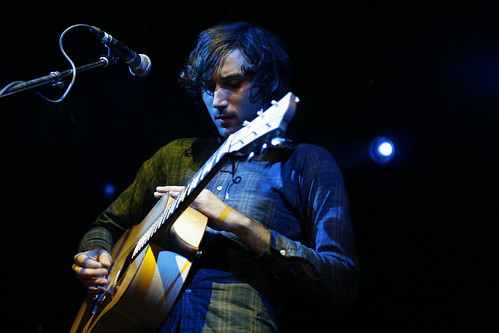
I have to admit that I was a bit concerned at the potential energy level, or lack thereof, that there could be at a Matt Costa concert. I mean, yeah, he makes great music, but it’s the kind of music you listen to when the night is winding down, not getting started. He is, after all, signed to Jack Johnson’s label, Brushfire. However, by his fourth song, “Yellow Taxi,” it was clear that this was going to be a great show by the support the crowd was giving him. He chose to play songs not only from his most recent album, Unfamiliar Faces, which was released in October, but also from his 2006 debut album, Songs We Sing.
Costa came on stage with his high-waisted brown slacks, his brown and orange plaid shirt and his acoustic guitar. and I thought that somehow I had been time-warped back to the ‘70s. When the background lights began swirling and whirling all retro-like, I was just waiting for him to whip out his hippies. Unfortunately, the hippies never came. For those of you who don’t know, Costa’s music brings together different decades of music by resembling at the same time Bob Dylan, the Beatles, Oasis and Beck.
As I mentioned, the show really got started when Costa sang “Yellow Taxi,” but when he positioned himself at his keyboard, you could feel the anticipation in the room. Something good was coming. Sure enough “Mr. Pitiful”, ironically one of his most upbeat songs, got the crowd clapping along. Not only is he very talented on vocals, guitar and keyboard, but he also strapped on his harmonica to sing “Cigarette Eyes” for his adoring fans, telling them that he “does not condone smoking cigarettes out of [their] eyes.” After a few low-key songs, Costa played “Sunshine” and didn’t even need to finish it off -- the crowd did it for him. They knew the lyrics as well as he did. When he played “Miss Magnolia” and his five-man band took out their tambourines, I once again expected the hippies to come a-frolicking, and once again, my expectations were not met.
Costa finished off his show with “Emergency Call” to the sound of an ecstatically satisfied crowd. He and his band left the stage but, when the cheers just didn’t die down, Costa came out alone to play a very intimate version of “Astair” for his audience. He then invited his band back and after thanking everyone, including the blinding orange light, they played one last song, “Sweet Thursday.” I must admit, it really was a pretty sweet Thursday night.
Tune in to On The Rocks with Jessica every Friday from 2pm - 4pm
HOT CHIP - Made in the Dark

By Simon Howell - The Listening Ear - 02/04/2008
I come here to praise Hot Chip, not to bury them. You see, there's a backlash going on. Many will have us thinking that these fine gentlemen are ironic hucksters, interpreting their infectious dance-pop songs as either perversions of "blue-eyed soul" or as obnoxious pranksters (depending on who you ask). I think there's a simpler explanation for Hot Chip's tendency to indulge every possible whim within -- and, occasionally, without -- the often sonically stifling realm of indie-dance; to these ears, the UK group are the closest thing we have to a new XTC. Where that group used new wave as a starting point for their flight-of-fancy explorations of the boundaries of pop and rock -- and some of the most inventive songwriting in pop history -- Hot Chip are taking their dance-based pop to places no one else will, or perhaps even can, dare.
Made in the Dark features the most dazzling opening tracks to grace an album yet this year, from the appropriately widescreen opener "Out at the Pictures," to the vaguely sinister, Todd Rundgren-assisted stomper "Shake a Fist," to the ridiculously good-natured single, "Ready for the Floor." The problems for many listeners begin with the admittedly eccentric "Bendable Poseable." The track delights in toying with rhythm and timbre in a way I can't recall hearing in a pop group for quite some time -- from Joe Goddard's deadpan pseudo-rap filling the rhythmic gaps (or "holes", as the lyrics would have it) in the first pre-"chorus," to a late key change accompanied by head-spinning synth slides. This deranged cacophony, while too much for some, actually sets the tone quite nicely for the album's best ballad, "We're Looking for a Lot of Love," which doesn't quite reach the seductive heights of The Warning's "Look After Me," but instead succeeds more generally as an RnB ballad so straightforward and flawlessly executed that's it's easy to imagine R. Kelly making a mega-hit out of it -- with melismatic embellishment, of course.
The album's second half, following the strangely under-produced but nevertheless effective title ballad, is more problematic. "One Pure Thought" is solid enough as the group's most "rock" song yet, but there's something off-putting about the opening minutes, where its opening riff gives way to a stuttering rhythm track and an insistent vocal chant. The track finds its footing eventually, but remains a bit of a slog compared to the confidently constructed pop tunes we've already heard. In fact, only the LCD Soundsystem swagger of "Hold On" and the off-kilter pop of "Wrestlers" (which recalls departed heroes The Beta Band) match the infectious energy of that opening run. Made in the Dark turns out to be the album equivalent of Spielberg's A.I. -- if you just pretend the thing ends when Haley Joel Osment is trapped on the bottom of the ocean (here represented by "Wrestlers"), you'll have a much more satisfying time. The funny thing is, though, that even if you hated A.I. you probably still remember it reasonably well. Hot Chip, too, manage to stay stuck in the minds of even their detractors. In the music world, at least, that's an asset anyone would be happy to possess.
Tune in to A Listening Ear with Simon every Tuesday from 1pm - 2pm
WINSLOW - Easy Access EP

By Omar Goodness - Hooked On Sonics - 03/01/2008
Mixing a variety of pop punk styles, local punk pop quartet, Winslow have put together a nice batch of catchy hook-driven tunes on their debut six song EP. The lead off track, and the best of the bunch, "Another Stiff in a Jacket," has some great jerky guitar work reminiscent of early ‘90s So-Cal skate punk; the Get Up Kids-esque "Next Time Around" skips along with a nice piano line and melody, and closer "Arthur Rightus" speeds through at a brisk pace, reminiscent of early Blink 182 and Face to Face.
While I may not be too into the songs in the middle of the EP, there's some nice potential in the fantastic songs mentioned. I also appreciate the fact that the keyboardist doesn't use any cheesy ‘80s style synth lines that seem to be peppering way too many punk pop bands nowadays, instead opting for full organ sounds, or even straight up piano.
Winslow may be doing something that’s not too groundbreaking, at times even self-deprecatingly referring to this fact ("this is a typical breakdown you'd hear in a lot of punk pop songs"), but they've got the chops to pull it off well.
Tune in to Hooked On Sonics with Omar every Tuesday from 6pm - 8pm
THE GUTTER TWINS - Saturnalia
By Comma Chameleon - Semicolon Cancer; - 03/04/2008
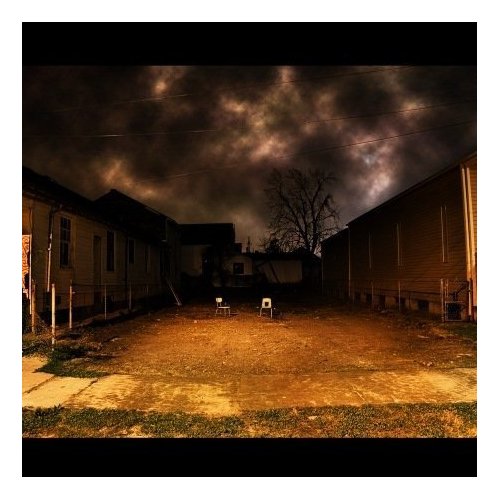
The biggest frustration with Saturnalia is that it almost guarantees success on paper. The blueprint for the album appears to have been to establish an impressive atmospheric front, and up the ante with each step, or beat, as Mark Lanegan and Greg Dulli close in on the enemy, the listener, in a pincer movement. Most of the album is a brick wall of sound created by collaborators Joseph Arthur and Queens of the Stone Age member Troy van Leeuwen (among others) -- something that both vocalists try to break through as it surges higher and higher; but there is no contact, there is no attack, as if such force is beyond their control.
As there was in past efforts -- a subtly inoffensive yet passive-aggressive vocal effect in ancient Screaming Trees tunes by Lanegan, and a strained but confident heart-breaker’s wail of agony from former Afghan Whig and current Twilight Singer Greg Dulli -- these trademarks are gone, and the two lovely voices have awkwardly merged.
Regardless of other thoughts I’ve read concerning Saturnalia, the two voices do not perform well together, with the exception of the instances of Lanegan’s more substantive singing voice pushing to the fore, which it does quite often. You will not hear a meat grinder in Lanegan’s voice, nor Dulli’s raven shriek, but they both croon, and the voices merge as if they were handling a multi-tracker and pitch-shifter. The high production quality on the record, in muting the effectiveness of the finest talent and biggest selling point to every fan who has anticipated this recording, which is the screech and scrawl of vocal chords and collaborative instruments, has effectively ruined this album. The gloom is still there. But neither of these fine gentlemen was intended to sound so clean.
This does not sound like the Afghan Whigs, over a decade later, despite the vocal assistance from former Whig, Martina Topley-Bird; if any parallels must be made, then the groundwork for the tone of this album can be found in the rougher corners of Lanegan’s recent work, both solo and with acts such as QOTSA and Mondo Generator. Dulli’s voice has mellowed in tone, and if you can recall his screams in primo Whigs era, circa early nineties, forget it. He’s sunk with Lanegan to the dismal depths of a lightless sea, such as if their voices had been recorded underwater, or at least “seven stories underground.” The edges of both vocalists have been lost in the mix, something which previously had been a crucial element to each of these men in respective projects, in propelling their lyrics and expelling their emotion. The biggest and nicest surprise was found in Lanegan’s modernized worker’s song, the slightly groovy “Bete Noire.” Apart from that, the meat that these two feed off of, their penchant for choruses, is a feast of tattered remains.
Put simply, they sound like they’re not into it. They can’t enjoy the freedom of creativity that they have on their own, even recently, with Dulli’s Twilight Singers and Lanegan’s Soulsavers. Enjoy the atmosphere -- since the meal has lost its bite, you may not be asking for seconds. From this record, which is still good in many aspects, I can recognize the talent in these individuals whom I admire over almost all others in their own respects, and I will be anticipating the next releases by both, waiting on tenterhooks…or meat hooks.
Choice Tracks:"The Stations" and "Bete Noire"
Tune in to Semicolon Cancer; with Comma Chameleon every Sunday from 9am - 10:30am
TAKEN BY TREES @ Cabaret Juste Pour Rire

By Mike Bresciani - The Lonesome Strangers - 02/25/2008
Seems as though the indie music community is filled with confusing side projects, revolving-door musicians, and solo projects that may or may not be worth the price of admission. There’s usually a lot of excitement and intrigue that follows the new directions many of these artists seem to be taking. In this case, we have Victoria Bergsman pursuing her solo ambitions with Taken By Trees after having fronted the excellent Swedish pop group, The Concretes, for the last decade.
One could not have picked a better setting to preview the new songs, as the Cabaret audience was small and attentive. There may have only been thirty people or so in the venue, but still, it just added to the level of intimacy needed to enjoy such an offering.
Taken By Tree’s first and only album, Open Field, was released in June 2007, and is not overwhelmingly different from past recordings with Bergsman’s ex-bandmates. The main discrepancy here would be that The Concretes had a rather varied arsenal of hook-filled pop songs (as well as an eight-piece band of musicians). The new recordings rely solely on Bergsmans’ ethereal vocals, and her melancholy storytelling while the instrumentation is hidden somewhere beneath it all.
Sounds like a tough sell, right ? It ain’t so…
Throw away the comparisons, and you still have ten gorgeous songs of yearning and pure beauty, all of which were played in their hour-long set. The amount of onstage musicians may have been cut in half, still, most of the band performed double duty on guitars, piano, xylophone, and mandolin. In addition, the b-side, "Above You," featured the first ever double recorder performance (two flutes, one mouth) this man’s witnessed since the third grade.
"You’re not many, but you’re important" Bergsman told us in her shy, accented manner. The relatively small turnout gave the audience a chance to take in the show, seated two-by-two, by candlelight -- something that happens very rarely at the Cabaret. Picking a highlight from the show would prove to be difficult, since nearly every song had a painful heart-on-sleeve sentiment I found memorable. Speaking of which, would you believe one of the more upbeat songs, “Lost and Found,” contained the following lyrics:
Can’t you see I’m lovesick?
I need a cure so bring it real quick.
This time I’m fearing heartbreak…
The song, “Only Yesterday,” may have been the most captivating moment of the night, as it was a short ode to loneliness with what sounded like raindrops and acoustic guitar being plucked underneath Bergsman’s lush vocals. The show ended off with a serene, upbeat version of "Sweet Child O’Mine" which was well-suited as a "last dance" kind of song, as opposed to hearing it full-blast, with grizzled bar room regulars and intoxicated college girls singing along.
T.B.T was a wonderful, somewhat unexpected surprise, both live and on CD. For one, I’ve always kept my hopes up when my favorite artist releases music with a new band, or solo moniker, only to be utterly disappointed by terrible offerings from the likes of say, Jeremy Enigk, Jarvis Cocker, and just recently, Chris Walla. My level of awe for this album rivals that of Amy Millan’s first (any only) solo album. It does not surpass it, however, it’s up there.
50 something days into 2008, the most memorable show…so far.
Tune in to The Lonesome Strangers with Mikey B every Wednesday from 3pm – 5pm
VHERNEN - Vhernen

By Jessica Valentine - The Incinerator - 12/29/2007
Hearing the sounds of howling wind and rainfall to introduce a black metal album is in no way unexpected. Being confronted a minute later with the growing sigh of an electric cello, however, is -- that is, unless you’ve already taken a peek at the insert art of Vhernen’s self-titled debut full-length album. I must say, the surprise is a pleasant one.
A one-man effort from the Faroe Islands, Vhernen is self-classified as “Funeral Black,” and the label fits. The album feels like black metal filtered through a snowfall that would do ice-loving Abbath of Immortal more than proud. Constant long-bowed strokes of the cello with very little vibrato cast the already misty guitars into a bleak near-monotone. The drum programming is conservative, and even where mid-paced blasts are used, they seem to create an eerie reverb effect that only adds to the hypnotic pulse of the music. Even the razor-sharp vocals are dulled by the oppressive ambience from which they only partially manage to emerge.
The structure of each song tends to be as ethereal as any other aspect of the music, the slow and largely unvaried progression communicating a sense of mournful tedium which has resulted in many sources describing Vhernen as “Black / Doom.” Nevertheless, guitar, cello, and synth-led melodies stretch rather than plod through the thick atmosphere; frequently, one instrument rises unhesitatingly to first seamlessly intertwine with, then subtly replace another for the lead. The result is a startling, face-forward plunge into apathetic coldness.
The album’s last track, “Lopransfjordur/Ende,” is an interesting denouement to such a charged musical experience. Nearly ten minutes of minimal ambience followed by five of a relatively tentative, classical-feeling, and repetitious yet in the end unresolved melody add a touch of poignancy to an otherwise uncompromising album.
In the end, what is so successful about Vhernen is its simplicity. With no one structural or compositional element prominent or easily graspable, he stops no short of and goes no further than creating an atmosphere of palpable bleakness. Maybe after years of living on a tiny island in the middle of the Norwegian Sea, mournful solitude becomes second nature; in any case, it certainly does sound good.
Tune in to The Incinerator with Jessica every Saturday from 8pm - 9pm
WYCLEF JEAN @ Metropolis
By Sinbad Richardson - There You Have It Folks! - 02/28/2008
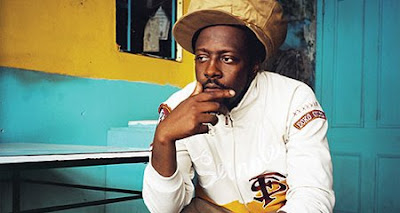
“Like this Montreal! Like this!” Wyclef bounced his arm before a growingly tired Metropolis crowd. The set began with the enigmatic performance of an unfamiliar melody on a grand piano. The crowd knew the song but I did not. Wyclef wore a carnival mask and a black plastic jacket which he tore off as he stood up. Strangely, the piano kept playing, and then the beat kicked in. Before long, everyone at the venue had their hands in the air and were completely enthused. Any resistance to the energy in the room was beat with a cover of House of Pain’s “Jump Around.” This first part of the show was awesome -- it felt like one of those parties that you always remember and use to compare every other party you ever go to. “I never play the same show twice!” Wyclef said to his die hard fans who had returned for the second night in a row.
Then a roadie handed him a guitar and the show took a new direction. We heard the more soulful side of Jean with songs like “Gone Till November” from way back and Bob Marley’s “No Woman No Cry” sung from a Brooklyn point of view. After setting up a laid back atmosphere, however, it proved difficult to bring the crowd back up to the bouncin’ dance hall stylings of the final part of the set.
Overall, the performance was on point for Wyclef, if not for the out-of-time changes of pace. There was an unsettling political overcast which was heightened during “Wyclef For President.” Haitian flags flew and Obama was praised. So far so good, but the air was pinched by comments about Bush Jr. and the tragedies of war in relation to the situation in Iraq. It was difficult to balance the freedom of beats that just take over and the harsh reality that is the mess left behind by George W. Bush. Should we be getting our political opinions from musicians? Maybe, but not in between waving your hands chanting “I came to get down, so jump around!” Sense-escaping beats and political messages can be mingled but it was not achieved at the Metropolis last night.
Wyclef’s voice was accessible, inclusive and most of all energetic, and this show was on point if not for small bumps in the road. It was like one of those parties that you remember as being awesome except for a brief, extremely awkward moment.
Tune in to There You Have It Folks! with Sinbad every Monday from 9am - 11am
PATHS OF POSSESSION - The End of the Hour
By Jessica Valentine - The Incinerator - 10/17/2007
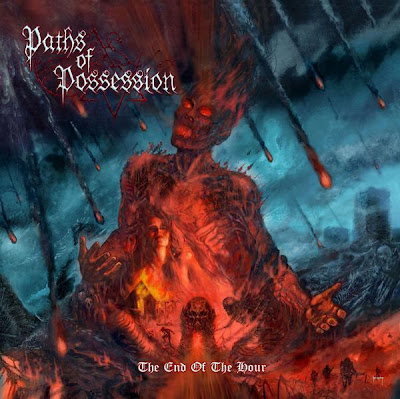
If you're considering getting into Paths of Possession, chances are you're a fan of famed vocalist George "Corpsegrinder" Fisher's work with Cannibal Corpse. I'll say this now: If you're looking for your next "Hammer Smashed Face," inquire elsewhere.
The main problem with The End of the Hour is its composition, which is as lifeless and non-committal as the "concept" that ties the album together (a fuzzy, insipid tale of a man whose self-pity -- sorry, I mean suffering -- somehow turns him into a murderous demon who brings about the apocalypse. Or something.) Forgettable, repetitive riffs sloppily strung together by sporadic pointless breakdowns provide the groundwork for aimlessly floating and suspiciously Gothenburg-esque melodies that occasionally promise some satisfaction but fail to deliver. Even the album's guitar solos, such as the one in the opening track, "Memory Burn," seemingly rise out of nowhere and, in the end, effect more confusion than catharsis. George Fisher's otherwise decent vocal performance also tires quickly due to the lack of rhythmic variance, though he does manage to mix it up occasionally with some rasps and shrieks.
These problems aside, however, The End of the Hour does have some strengths. The overall musicianship is sturdy, if largely uninspiring. The melody in the beginning of "I Am Forever" almost succeeds in communicating the building sense of inevitability that I believe the band intended, and that in "Poisoned Promise Land" actually does succeed in being quite engaging overall. Furthermore, the album's production, courtesy of Hate Eternal's Erik Rutan, is extremely flattering, with chunky guitars and the prominent, fluid bass offering an overall smooth, pleasing sound.
While not without its redeeming qualities, the two most defining characteristics I can assign to Paths of Possession’s The End of the Hour are boring and directionless. With improved songwriting, this band could probably release a fairly decent album; until then, save it for background noise.
Tune in to The Incinerator with Jessica every Saturday from 8pm - 9pm
SUPER FURRY ANIMALS + Times New Viking+ Jeff Lewis @ Cabaret Juste Pour Rire

By Simon Howell - A Listening Ear - 02/21/2008
It's not often you spot a triple bill in which you're well acquainted with all three groups. In this case, I'd heard two albums apiece by the opening acts, and the headliner was one of my all-time favorite bands. On my way to the venue, I thought about how odd the bill was and when I got there, it turned out I was right -- it was like attending three separate, entirely unconnected events.
First, "anti"-folk singer -- and handsomer fellow than I'd imagined -- Jeffrey Lewis took the stage, armed only with his sticker-laden acoustic guitar and a keyboard. Lewis charmed the crowd early with an a cappella ode to Ramen noodle soup (apparently I should be keeping an eye out for the blue Ichibans). From there, his set consisted of the simple, confessional and funny songs he's known for, albeit interspersed with a pair of tracks from his Crass covers album -- one of which, "Gasman Cometh," was as grim as the rest of the set was goofy. The highlight of the set surely consisted of the song/performance piece, "Creeping Brain," which featured Lewis singing and flipping a storybook depicting the song's epic tale of a giant brain run amok (only to develop into a saintly martyr for human salvation), accompanied solely by himself on a tape recorder, playing guitar and singing backup vocals. I was a little disappointed that we didn't get a rendition of "Chelsea Hotel Oral Sex Song," particularly as he was performing in Leonard Cohen's hometown, but he was easily forgiven.
Athens' Times New Viking sped through about a dozen songs in what couldn't have been more than twenty minutes, blasting through their energetic songs with trademark efficiency. As I was observing them I discovered the appropriate name for their style: trad-indie. Their hooky, deliberately crude songs -- complete with lo-fi production values as an aesthetic decision -- betray their basic purpose as somewhat of a nostalgia act for people who need more songs that sound like their favorite bands' earliest, crudest releases. Their aesthetic is seemingly meant to evoke the old rockist idiom that the best bands are writing the best songs in garages and recording them with the crappiest equipment. I don't really mean this in a negative way -- some of their songs are fantastic, particularly "Devo and Wine" (the evening's set opener) and a good portion of their new album, Rip It Off. It's just a little strange to see a talented group so clearly and willfully setting strict boundaries on their sound. They've released three slender full-lengths now, and while there has been some improved songcraft, their forcefully regressive live show made their intentions clear. They've certainly got stage presence and energy, but something about their approach sets me at a bit of a distance.
(It should also be mentioned that drummer/vocalist, Adam Elliot, committed the second act of microphone imbibing I've witnessed in as many months. The first was at Clockcleaner's deafening New Year's show. Is this some sort of emerging trend I've been missing out on, or have overeager vocalists always been doing this sort of thing?)
The last time the Super Furries came to town, they were still on a major label, touring in support of their most divisive LP to date, Love Kraft. The album represented their most indulgent period; it featured massive orchestral arrangements, choirs, massive choruses and songs that routinely stretched well beyond five minutes. Predictably, the show I saw in support of it was a little heavy on the portentous numbers from that album, albeit still interspersed with a few of the spiky pop tunes of their past. This time around, it's a different story altogether. They're touring in support of Hey Venus!, their most concise, pop-minded album since their 1996 debut, Fuzzy Logic. Now signed to Rough Trade after their contract with Epic expired, the band members were stripped of the more extravagant aspects of their old live shows -- no laser suits (although they did have matching outfits emblazoned with Keiichi Tanami's artwork), no projectors and no golf karts. The only multimedia indulgence this time around was a widget on their website that allowed fans to vote for which songs out of a shortlist they most wanted to hear performed.
The five-piece was distilled to the most basic aspects of its sound without many of the synth embellishments of the Love Kraft era -- this was a guitar-dominated affair. The awkward exception was opener, "Slow Life," whose programmed beat and orchestral elements the band played on top of, rather than attempting to recreate. It was a bit like they were doing a karaoke set of their own track, and bandleader Gruff Rhys' laconic vocal work on the song didn't help. The rest of the set's first block was overly dominated by the group's fastest, shortest pop songs -- "Do or Die," "Rings Around the World," "Golden Retriever," "Neo-Consumer," and an unfortunate new version of classic single, "Northern Lites," which did away with the original's bizarrely appealing combination of sprightly horns and steel drums in favor of a steamrolled electric guitar arrangement.
The set took a much-needed turn with an amazing performance of "Receptacle for the Respectable," a tripartite pop epic that made use of, among other things, a voice modulator, multiple guitar switches and carrots (famously recreating the crunching percussion on the Beach Boys' "Vege-Tables"). The song's roaring faux-metal climax even culminated in Gruff gloriously crossing guitar necks with lead guitarist, Bunf, and bassist, Guto. It was a silly moment, but their sheer conviction and ability let them pull it off with panache. Similarly successful were older tracks like "She's Got Spies," "Juxtaposed With U" (on which Gruff switched between standard and vocodered vocals with ingenuity), and the sole Welsh track of the night, terse rocker "Calimero." After a brief return to the aimless energy of the first half with upbeat, but vacuous, Hey Venus! tracks "Baby Ate My Eightball" and "Into the Night," things perked up again near the very end with a spirited rendition of early single, "The Man Don't Give a Fuck" -- performed at its original running length as opposed to the twenty-minute techno freak-out version that had graced their last few tours -- and psychedelic pop nugget, "Keep the Cosmic Trigger Happy."
After their twenty-song, ninety-minute set, the band held up signs proclaiming "Resist Phony Encores," and indeed they didn't return once they exited the stage. I was left with mixed feelings about the set. They'll always one of my very favorite bands, and have been since the release of Rings Around the World, but I sometimes wonder if they know their strengths. Their slower pop numbers are at least as satisfying as their upbeat ones, if not more so, and a better balance of both would have been appreciated. Of course, the audience voted to include "Golden Retriever" and "Northern Lites" rather than "Carbon Dating" or "Down a Different River," so I must be in the minority on this.
Tune in to A Listening Ear with Simon every Tuesday from 1pm - 2pm
Pages



Staff Login | Advertise | Our Location | RSS | Contact Us
