RSS
Gatecreeper Unite Fanbases at Foufounes Électriques

The Gatecreeper headlining tour stopped in Montreal this Monday, bringing the Arizona act’s blend of death metal and hardcore north of the border. Gatecreeper are touring in support of their newest EP, An Unexpected Reality, a near 18-minute sonic assault that further establishes the group as one of the leading players in the modern death metal scene.
Three supporting acts took the stage prior to Gatecreeper in the form of Fearing, 200 Stab Wounds, and Narrow Head. Those present definitely anticipated 200 Stab Wounds' set, which gave off an energy expected from a group with such a name. It can confidently be said that a minimum of 200 stab wounds were delivered at the show, most of which coming from the band's stomping death metal riffs and maniacal technical guitar solos. The Ohio-based act proved worthy openers for Gatecreeper, providing audience members with a death metal taste test while waiting for the headlining act.
Another noteworthy opener was Narrow Head, who took those present right back to the ‘90s with their depressive, grungy, noise-rock sound. Clearly influenced by acts like Sonic Youth and the Melvins, the Texas-natives managed to captivate the audience at Foufounes Électriques, despite playing songs that pale in comparison to the heaviness of Gatecreeper bombers. Narrow Head’s ability to incorporate heavier riffs and the occasional guttural scream into their downer songs made them a pleasant surprise for the lineup.
It’s not surprising that Gatecreeper stole the show. As previously mentioned, their blend of death metal song structures with the attitude of hardcore music make them an absolute treat to see live, their genre fusion serving almost like a cheat code for getting heads in the audience bobbing. Frontman Chase H. Mason powered through number after number, delivering an enduring performance.
The band played a fair mix of material from their three main releases, 2016’s Sonoran Depravation, 2019’s Deserted, and their most recent EP. Their performance did prove much of the reviews for their second full-length, as fans criticized Deserted for its slower, groovier numbers, saying it failed to match the intensity of their powerhouse debut. Unfortunately, critics were proven right when these new tracks were played live, as a few of Gatecreeper’s longer opening songs left fans itching for more. Thankfully, the back half of their set was heavy on their new EP and debut, as more fans began climbing on-stage and throwing themselves into the audience.
Despite the strong performance, it’s interesting to note how the behaviour of audiences changes based on what flavour band are playing. While straighter metal shows encourage push-heavy moshing, the pit tonight was filled with karate enthusiasts, flinging their limbs around frantically. These karate-moshers tended to distract from the show, as a wide circle pit was created for only a handful of offenders, those on the border trying to avoid flying fists. It seems like the presence of these hardcore kids stems from Gatecreeper’s sonic fusion with the genre, an interesting consequence of their style of music. At more traditional metal shows, these fist-flingers would be quieted down fairly quickly, as this kind of moshing tends to be frowned upon within metal circles. Metalheads are totally fine with people flying into them at shows, but getting your teeth knocked out by someone practicing their pitcher’s throw isn’t as fun.
The situation clearly disgruntled Mason, who asked for a “push-pit” right before going into their final song of the night, “Flamethrower.” The crowd reacted well to this encouragement, as the pit filled with fans who wanted to get one last mosh in for the night. Despite the clashing between hardcore kids and metalheads, who got into a few minor altercations, Gatecreeper managed to pull everyone together in the end.
All in all, the tour’s Montreal stop proved that this lineup has a lot to offer audience members, despite some supporting acts seeming a tad out of place at first. As the Gatecreeper headlining tour continues to ravage North America, make sure to attend if they’re stopping by you.
Hunter co-hosts The Iron Club, your weekly guide to the dark and mysterious realm of underground metal, which airs every Sunday from 9:00 - 11:00 p.m.
Lloyd Cole’s “So You’d Like to Save the World”: A Song Best Paired with 21st Century Existential Angst and a Morning Metro Ride to Work

In 1882 Friedrich Nietzsche declared “God is dead” and then in 1945 Jean-Paul Sartre posited, “existence precedes essence”. But nearly 50 years later Lloyd Cole sang, “you might call it ultraviolet radiation / it’s only sunlight”.
Born in the post-war world of 1961, musician and songwriter Lloyd Cole grew up in England, later studying English literature and philosophy among the ‘80’s post-punk generation at the University of Glasgow. A time in which he was fated to meet the future members of his band and form Lloyd Cole and the Commotions. In 1984 they made a name for themselves in the British indie scene with the release of their debut album Rattlesnakes, a jangly record with allusive lyrics informed from Cole’s literary background. The band produced two more albums - Easy Pieces (1985) and Mainstream (1987) that to their dismay, didn’t quite meet the Rattlesnakes standard among the critics - the group disbanding shortly afterwards. Despite the break-up, Cole embarked on a solo career, releasing his debut album Bad Vibes in 1993.
“So You’d Like to Save the World'' belongs to this very album. Upon first glance the album cover greets its listeners with a picture of a brooding Lloyd Cole, who sulks in a Schopenhauer-esque disposition. He dons a suit and a cigarette droops in his hand while being cornered; providing the overall illusory image of a world closing in on him as the pessimism of the Bad Vibes album name looms above.
This portrayal of the cynical antihero ensues on the track where Cole, as the speaker, urges a romantic interest “[who’d] like to save the world / to take one person at a time and start with [him]”, paralleling a poet’s invocation of the muse; a notorious convention of Epic poetry enacted by the poet when in need of guidance. Epic poems typically revolve around a tedious voyage of some sort, in hopes to overcome obstacles from external forces. They also look warily at the future civilizations. In this vein, Cole takes his playful courting, climate change anxieties of the early 1990’s and turns his song into an epic poem of its own. In 1989 the Los Angeles Times published an article, headlining how: “Global Warming Is Expected to Be the Hot Issue of 1990s: Some scientists studying the greenhouse effect say the sky is falling”, an ethos that clearly contextualizes “So You’d Like to Save The World”. The chorus directly addresses these worldwide concerns, when the speaker asks the song’s heroine if they “really [cried] / when they saw that hole in the sky?”. Solace is then offered when Cole delivers those resounding lyrics: “you might call it ultraviolet radiation / it’s only sunlight”, emphasizing how even in the most harrowing times, the sun’s burning rays don’t have to be a source of detriment. And the sun’s natural essence (to put it existentially) can just be sunlight—not in a climate change denying way of course, but in a way that is ultimately grounding and reassuring.
Or maybe, in a way which I've decided to coin as: desperate. Although Cole’s song is devoid of philosophical jargon, it (similar to the works of Nietzsche and Sartre and any other existentialist alike) is imbued with the very pathos of existentialism; the uncertainty, the angst and the disillusionment that popularly reared its ugly head in the ‘40’s and that echoes furthermore in the song’s vulnerability. This desperation evades a rightful name from being such a visceral and therefore ineffable feeling but ultimately provides a catharsis to listeners that is sympathetic in its brutal poignancy. Even the mere lyric of the song title, “so you’d like to save the world”, isn’t posed as a question but as a warm glint of hope; an affirmation of possibility. The song could very well be the older cousin of “Bittersweet Symphony” by The Verve. And maybe that’s why it makes me cry on my morning metro rides to work.
Accompanying the last verse of the song is a flaring guitar melody that happens to be the musical equivalent of the sun reaching its zenith on those languorous summer days. It scintillates in the air and gives way to perhaps the most heartwarming moment of the song where Cole sings, “so you’d like to save the world / I’d really like to help you” then finally admitting, “I’d really like to be you for a while”; resulting in an overwhelming release. It’s also the moment when Cole as the antihero, takes the Kierkegaardian leap of faith; the subjective action one makes despite their inner-cynicism and angst to believe in something that cannot be objectively proven. For Cole, it’s not solely believing in the “Motorola generation chic” woman he serenades but more so in the notion that opening one’s self up to human connection, especially in times of peril, is what makes life meaningful.
The song’s environmentalism isn’t the only subtext at hand nor the only catalyst for existential angst. “So You’d Like to Save the World” and the Bad Vibes record collectively evince themes of making the transition from one’s halcyon days and onto those that eventually become disillusioning. In Cole’s case it was the transition from being 23 and in his heydays of making commercially successful music in Glasgow alongside his band, to being uprooted further into adulthood that made him wear the suit of growing up in order to trudge along with the present. I’ll make my final plea: listen to “So You’d Like to Save the World” and as Cole, in his winsome tone of voice suggests, “free [your] inner child”.
Without Waves - Comedian Album Review

There are certain things you probably can't just pick up from only kind of knowing someone. For instance if you've read any of my previous reviews or listened to my show, you may not realize – and please, sit down before you read this next sentence – I am a bit of a weirdo.
Out of courtesy, I will allow you to recover from this shocking revelation.
Are you back? Great, let's keep going.
Being a weirdo, my musical taste reflects my weirdo-ism usually culminating in bands that are full of straight up crazy people who do crazy things in their music. As a recent example, I was a full on convert to the Melted Bodies school of musical weirdness and spastic nature. The problem is that artists like this don't make records every month for me to chew on, spit out, pick back up and rub all over my ears, as is customary. And this past month, on March 18, I was given a true weirdo gift, lovingly sent from Chicago to me from Without Waves, in the form of their record, Comedian.
The band has been going since 2010, and have managed to put out 2 albums and an EP before this release, none of which I have any concept of, so going in I didn't know what to expect, but being on Prosthetic Records, I knew there would be some quality control on it. Little did I know the all over the place ride that this record would take me on.
It starts off pretty straightforward, almost System Of A Down-like in its manic aggressive energy through the first two tracks "Good Grief" and "Animal Kingdom." I say System Of A Down, but really, this also feels like a band that could share the stage with the aforementioned Melted Bodies or Dillinger Escape Plan and since this was two back to back tracks kicking off the record, I expected the record to continue in this vein.
But it quickly shows that isn't the only point of reference the band is pulling from. In fact, even though the record starts here, where it ends up is decisively more in the realm of prog bands. Around "Set & Setting" the album starts to delve more into this prog-esque territory, as if it's doing a musical copy of Tool, more slowed down, prodding elements until the album takes an unexpected more Devin Towsend turn which fully unveils itself during "Do What Scares You." It starts off with what sounds like a distonal piano and other random instrumentation that you'd expect on a heavier Devin side project before it gets to Strapping Young Lad. Think of one of Devin's Ziltoid records as a reference point.
This sort of continues into the next track, "Sleight in Shadows" but I guess more accurately it sounds like if Periphery got really into adult-oriented rock, which I suppose is something that could happen here in the weirdest and darkest timeline. This sort of continues on "Day 15," even having a strange robot part at the end that could easily sound like something Animals As Leaders or Styx would throw onto a track and no one would bat an eye.
By the time "Worlds Apart" shows up, with its slowed vaguely slide guitar country ambiance, I thought I had slowly slid into a parallel universe from where I started. As the last track approached, I thought, "Well, this must be leading to a blow out track where all of these elements are going to combine and bring this album together."
Alas, even though the last track, "Seven" is seven minutes long, it's more of the same proggy-ness that precedes it, disappointing me greatly. Sure, it has a start that's more like a desert psych trip before it cuts into what the rest of the album was doing, but here was a perfect chance to revisit the chaos of the first couple tracks and find a way to meld the more prodding, moodiness of the rest of the record but it was not to be.
Really, this record sounds like another victim of the pandemic but in a really weird way. It's as if most of a record was written and then put down only for the band to come back with the intent to do something different, but not waste what they already had, so they kind of just slammed the two together. If you're asking me how this could have been fixed, which clearly you are, the easiest fix would be to write a bit more of the second half and make that a full record and maybe do an EP after writing one more of the odd ball tracks, or just make a track that makes the transition a little less apparent. That's two options for the price of one. What a value.
So, if you like the weirdo stuff, there's way worse options you could pursue. Prosthetic continues its streak of getting bands that have something interesting to contribute to metal, and Without Waves proves that even though they apparently feel super comfortable in the more melodic sphere, they have the ability to stretch the boundaries of what that can encompass, and hopefully, that will make its way on to the next album in a more flushed out way. Or, maybe just a schizophrenic collection of songs that sound like they're all written by different bands, whichever is more convenient.
Stabbing Westward Chasing Ghosts Review

Many of you have probably not read the book Feed by Matthew Tobin Anderson. It's okay; it's not the best. I mean, it's fine, but like, do you really NEED to read it? "No," is the answer.
Anyway, the book is about a future where people basically have the internet installed in their brains and mainly centers around a small group of teenagers living in this world. It has various comments on economic class, societies obsession with social media, and of course, since it was written in 2002, there's a whole "young adult" love subplot.
But the most interest concept presented in the book, and the part that still sticks with me is the following:
"Then later there was this thing that hit hipsters. People were just stopping in their tracks frozen. At first, people thought it was another virus, and they were looking for groups like the Coalition of Pity, but it turned out that it was something called Nostalgia Feedback. People had been getting nostalgia for fashions that were closer and closer to their own time, until finally people became nostalgic for the moment they were actually living in, and the feedback completely froze them."
An interesting concept, right? The idea that eventually nostalgia will become so close to our lives that we'll experience it for a time that we literally just had.
Well, having nothing to do with anything, here's a review of Stabbing Westward’s latest record Chasing Ghosts.
For those unfamiliar, AKA those below the age of 35, Stabbing Westward was an industrial goth rock band that released a handful of records from 1992 - 2001 and then broke up. In addition to having either the dumbest awesome name ever or the most awesome dumb name ever, Stabbing Westward was able to carve out a pretty solid niche for themselves among such other bands as Static-X and Gravity Kills as the darker industrial tinged side of mainstream rock radio. You see, back then, bands could actually make it to radio that DIDN'T sound exactly the same and occasionally a real outlier could even make it onto top 40 radio (see Nine Inch Nails with "Closer"). I know, wild right?
Anyway, for some reason, that probably relates to wanting money, they officially reformed in 2016, released two EPs in 2020 (one strictly of covers), and now, twenty-one years after their last and worst record, have released a new album.
Now to say that I've been following this band for some time is a bit of an underrepresentation of the truth. Though their past efforts, namely 1996's Wither Blister Burn & Peel didn't really speak to me, Darkest Days was probably one of my favourite albums when it came out in 1998 along with Monster Magnet's Powertrip, Local H's Pack Up the Cats, Finger Eleven's Tip, and three nu-metal genre defining albums that came out the SAME DAY (August 18th): Orgy's Candyass, Kid Rock's Devil Without a Cause, and Korn's Follow the Leader. And no, I will not be apologizing for liking these albums or putting some "Please don't judge me" sentence because obviously the music you like when you're young encapsulates a specific moment in time and fuck you I liked something and I won't be shamed for it.
So, I was very sad when Stabbing Westward broke up, especially since they went out on such a musically low note. I was excited to listen to lead singer Christopher Hall's new project The Dreaming, even though it was basically just a more straight-forward version of Stabbing Westward. I even listened to the two EPs, so now that I've laid all this out, I guess I should talk about the new album.
In basically every aspect, this is exactly what someone who listened to Stabbing Westward would expect this album to be. Musically it's like if a cover band (or The Dreaming) came in and reworked various songs from Stabbing Westward's previous records. Tracks like "Crawl," "Push," and "The End" sound like B-sides from the self-titled record, while other tracks like "Dead & Gone" and "I Am Nothing" don't feel like they'd be too out of place from Darkest Days. Even "Wasteland" seems like a current day recording of something that existed since Wither Blister Burn & Peel. So, no, this record does nothing really to add to the music scene it is a part of or advance Stabbing Westward into a new position, which would make me say that this album is therefore bad. After all, what is the point of music if it doesn't somehow advance the band or music in general?
And if you assumed this point, you would be incredibly wrong.
PLOT TWIST!
In many respects this record is a product of a bygone era; a period that lasted from the late 90s to the mid 00s and does not continue to today. With this fact in place, it could be argued that doing anything that even approximates a record from that time is in itself pushing music forward, just by trying to remind us of what a specific moment in time was like. It's like reading through something you wrote when you were younger and probably filled with a more youthful optimism and, for a brief, shining moment, vaguely remembering what that was like, but then realizing that moment is gone and will never truly be able to be recaptured and even if you tried it will never be the same. And the band must be aware of this - hell, they literally called the album "Chasing Ghosts."
But context is important, and the fact that this album is them reasserting themselves after a twenty-one year album hiatus I would argue is probably the best move. In addition to having to re-solidify themselves with the audience they had, they have to introduce themselves to a new audience. The easiest way to do that is basically to take what you believe to be the best parts of what you've done in your past and increment them just that liiiiitle bit to modernize them.
Overall, the record is pretty okay with a couple of more mundane tracks. If you have never heard this band before, this isn't the worst record you could start off with as an introduction, mainly because the rest of the discography is more raw versions of this. If, instead, you are like me and you too have been waiting for new Stabbing Westward, this album may actually catch some of those ghosts mentioned in the album title.
Now if you'll excuse me, I need to get my best black clothes ready for the new goth revival which is DEFINITELY GOING TO HAPPEN!
The Lost City Film Review

Action, adventure, comedy, and a little bit of romance were mixed to create the movie The Lost City. Let’s not forget about the light presence of romance we could feel between the main characters, the novelist Loretta (Sandra Bullock) and her cover model Alan (Channing Tatum).
Directors Aaron and Adam Nee produced a typical action-comedy movie which contains explosions, a bad guy and a mission. In the first act we saw the character of Loretta who is struggling to finish her novel because she fell into a routine after the death of her husband. Throughout the movie, the audience follows the growth of Loretta, who found joy in life with the help of her cover model while trying to escape from the hand of the rich Abigail Fairfax (Daniel Radcliffe) in the lost city.
This film did not particularly stand out compared to other action-comedy movies like Jumanji: Welcome to the Jungle released 2017, which both rely on the same environment, the jungle. Tatum has played better roles than this one especially in 21 Jump Street where he offered a memorable performance as an undercover police officer with his partner Jonah Hill.
However the comedy in The Lost City was nicely executed. The constant quarrels between the main characters were hilarious, we could hear the audience laugh throughout the whole movie. The other actors did a great job as supportive roles, in particular the character Jack Trainer (Brad Pitt) did not go unnoticed.
Overall, it was a simple movie, nice to enjoy on a Monday night with friends and family. The movie relaxes and gets you out of your head for one hour and 52 minutes after a long day.
The Lost City is currently on screen in theaters.
Myrialine is a CJLO volunteer, magazine contributor and avid movie fan.
Ghost - IMPERA Album Review

I think we're going to start this review with me talking about my favourite vodka. I think it will be clear as to why as we go on, but just bear with me for a moment.
At this point in history, I'm mainly a rum drinker, but when I first started drinking, my liquor of choice was vodka. I tried a lot of different brands and types of vodka. Pro tip: vanilla vodka and Pepsi or Coke makes a pretty delicious combo for when you want to add a sweet flavour to your drinking.
Oh, I should probably also take this point to say this is not sponsored content, though, if anything I'm about to mention wants to get in touch... You know...
Anyway, of these vodkas, I was partial to Grey Goose because I found it to be the smoothest of all the vodkas. Very little burn, very tasty; 5 on 5, would drink again. The problem with Grey Goose is it was, and to some extent, still is, pretty pricey, and as a college age drinker, I didn't have tons of money to throw around, so I needed to find an alternative.
So, one day, I was looking to replenish my alcohol supply when I came across a vodka I had never seen before. It is, and I guess still is, called Blavod. So, what was it that made me see this bottle and actually take the time to check it out among the sea of clear bottles at the liquor store? It was black.
I know, very cliche for someone that likes metal.
After I picked it up to examine this anomaly, I discovered it wasn't the bottle that was black, but the actual vodka itself. Why? Well, it has something to do with an extract from an Acacia tree... you can look it up if you're interested. I'm not an alcohol scientist.
As I looked at it, I of course had the thought, "This can't be good. First off, it's not super expensive. Second, vodka is supposed to be clear; this is the opposite. It must be awful," followed basically immediately by, "... buuuuutttt it's black, so I guess I have no choice."
I know, very cliche for someone that likes metal.
So I walked out of the store with my Blavod and can you imagine my surprise when I tasted it and found this cheaper, non-regular coloured vodka was just as good, if not more smooth and tasty than the higher shelf Grey Goose that I had been buying. And that is the appeal and joy that sometimes comes from gimmick products. On the very rare occasion, they can be as good or better than other "more traditional" offerings.
And so, with that, we land on a band that has taken their gimmick and run with it to levels only rivaled by KISS, that being Sweden's Ghost, formerly Ghost BC, formerly just Ghost.
Yes, the band has returned, with all the regalia and imagery intact, after their last ‘80s, stadium rock album, Prequelle, with a new record, IMPERA. But of course, it's still holding true to "Catholicism but all about Satan."
I know, very cliche for someone that likes metal.
Apparently set "thousands of years after the last record," whatever the hell that means. Were you too also under the impression that Ghost was copying the Catholic church of today? Well, it turns out we're the idiots and this was set in the past... Or maybe the new record is set in the future? Doesn't matter; the point is the concept is still going and apparently there's some story here and all of this is to highlight that I won't be talking about any of it. Instead, I will make the bold, and might I add, brave, stance of looking at just the music experience of this record, especially since the jump in time has affected that said music in basically no way.
Returning is the same ‘80s influenced stadium rock from the last record. Ghost seems to have landed on a formula that works for them with the notable exception of main mastermind Tobias Forge looking at the "prog" knob on the mixer and turning that up to mid levels.
This is pretty apparent as the record starts off with the particularly soaring "Kaisarion" that sounds like the band trying to formulate a track which has all the weirdo guitar passages of an ‘80s prog band, but with some sing along parts to really "get the audience involved,” and it pretty much pulls it off.
Though, he does manage to reel this in on tracks like "Spillways," which starts with the beginning of "(I Just) Died In Your Arms" and ends with every soaring guitar solo the ‘80s ever made.
That's not to say that older, let's go with "pre-’80s" Ghost is not present here. Most of "Watcher In The Sky," and "Twenties" have that weird "Mercyful Fate but at a circus" type of vibe you can imagine from Meliora.
There is another difference in this record, which may be a prequel (ha... see what I did there?) to Ghost going in an even more poppy direction with the last third of the record sounding like tracks that could easily sit as a "rock entry" in Eurovision, barring of course the length of the last track, "Respite On The Spitalfields."
So I guess if I have to rate this record on the scale of Ghost records, I'd say we're at a solid mid tier. It's not as smooth as the Grey Goose that is Meliora, but I'd say it sits around a SKYY or a Stoli level; not quite reaching the popularity of Smirnoff, but always looking to try to take the spot, especially now that Russian vodkas are being banned at liquor stores. Oooh look, a topical reference!
Now, if you'll excuse me, I need to go run my Crystal Head Vodka through a Brita filter a bunch of times to try to make it palatable enough to drink.
I know, very cliche for someone that likes metal.
Ti West’s X: A Critical Review

Warning: this review contains spoilers
There are seldom things more ‘70’s than a group of young friends, clad in cowboy boots and flares, embarking on a road trip seemingly in the middle of nowhere in rural Texas to film an adult movie. Directed, written, and produced by Ti West, X is set in 1979, paying homage to the slasher films of the 1970’s; the decade’s nostalgic charm being admittedly, exactly what prompted me to buy my pass for the movie within minutes of reading about it last week, as well as the fact that slasher movies have become increasingly unpopular and I was eager to see what a modern day interpretation of the classic slasher films would look like.
It’s no secret that the horror films of the past are riddled with misogynistic stereotypes, and unfortunately X reveals itself as not being totally exempt from that. With a textbook plot there of course comes its textbook characters: the blonde Bobby-Lynne (Brittany Snow), the brunette friend Maxine (Mia Goth), the Black friend Jackson (Kid Cudi), the “pure girl” Lorraine (Jenna Ortega) and a more contemporary archetype I would be okay seeing more of, the-film-bro-who-believes-his-porno-is-art-caricature, RJ (Owen Campbell). West juxtaposes the young characters with the two eerie elderlies: Howard (Stephen Ure) and Pearl (also played by Mia Goth) who own the farmhouse the younglings film at.
All is dandy until Lorraine decides she also wants to star in the adult movie alongside Maxine and Bobby-Lynne, causing frustrations with RJ whose Madonna-whore complex is at an all-time high with claims along the lines of her not being “dirty like those other girls”. After Lorraine partakes, RJ’s character wakes up in the middle of the night for the textbook cleansing shower scene, instead of Lorraine. This is where X appears at first to be promising in terms of subversion, as it would usually be the pure girl doing so. Still in his hissy fit, RJ decides to take the car and abandon them in retaliation but like an apparition in the headlights, Pearl appears and halts his endeavour. Having spied on the young crew having sex knowing full well she hasn’t been able to have that connection with her husband in years on account of her old age, she imposes herself on RJ. He rejects her because of her undesirability, and she bludgeons the film bro to his death. It’s at this point in the movie where the audience is inclined to think that perhaps the elderly woman is the real victim all along, and the real antagonist is the beauty standards established by the male gaze that prioritizes youthful, beautiful women; seems like a real neat theme for a feminist horror movie.
Despite Pearl’s killing spree, the audience even begins to sympathize with her, seeing how she’s been reduced and ousted to such a great insignificance due to her old age. Except, that in the end, West fails her character arc when Pearl is pitted against Maxine—the Final Girl who she puts on a pedestal because she’s the brunette friend and therefore “seems different”. Though I’ll hand it to West, for (whether intentionally or not) subverting the stereotype of the Final Girl as Maxine, who openly wants to be the star of the raunchy film is the Final Girl; whereas horror films are notorious for wanting to make a statement with the pure girl as the last one standing.
It’s also no secret that horror films of the past are ridden with racist stereotypes. Cudi’s character happens to be the only Black friend among the crew. Even in this tribute, Jackson is only limited to being the static, supporting character to their white friends. One would hope that for a chance to rectify these racist stereotypes, seeing as it is 2022, West would’ve taken the opportunity to subvert them. And although Jackson isn’t the first to die, he dies when the old, white man shoots him right after he fulfills being the “mythical Black man''—the stereotypical Black character who guides the white dude (think Dick Hallorann in The Shining). Moreover, most of Jackson’s scenes are of him being subjected to the stereotype of the lustful, hypersexualized Black fiend that screws the white woman—actually, women, in this movie.
Despite the unnecessary stereotypes, and to end this review on a lighter note, X uses the conflict of the older generation vs the younger generation and shines it under a refreshing light that is to be appreciated. At times, old age seems to be the real horror of the movie as it’s depicted as isolating and devoid of connection. Pearl wants to feel relevant and of course she is the one who is seen suffering at the short end of the stick in comparison to her husband- paralleling how women suffer the most in contrast to men at the hands of society as they age, due to rigid beauty standards that demonize those that don’t fit within them. West even includes a scene that’s both poignant and shocking at the same time: Howard and Pearl having sex despite the potential risks of heart attack that later brings Howard to his demise—something that I’m sure most of us have never seen from a medium that primarily lures its audience in through its eye candy cast.
If you’re easily allured by escapist nostalgia and horror, then X is a film you’ll enjoy. If you’re someone who anticipates the horror genre ridding itself of harmful stereotypes, then X is a film you most likely won’t enjoy.
Zeal & Ardor Review

Boy, the new Zeal & Ardor album is good.
Oh, that's probably bad. I shouldn't start out with the direct opinion, right? It defeats the purpose of you reading the rest of the article. But, then again, I can't be accused of burying the lead. Maybe what I should do is act like I didn't start with any of this. I could edit it out I guess, but... no, that seems like work.
Anyway, Zeal & Ardor is basically a one man show from the brain of American/Swiss genius Manuel Gagneux. He started the band when he went on 4Chan and asked people to post two genres and he'd make a song about it. Since it’s 4Chan, black metal came up and was immediately followed by a racial slur. Rather than quit the endeavour he was on, he decided to take up the challenge and created a track with black metal elements and Southern Black spirituals; and thus we now have Zeal & Ardor.
Now those that know me are not shocked to learn that both Devil is Fine and Stranger Fruit, the 2017 and 2018 releases respectively, were both high on my albums of the year, and though the Wake of a Nation EP didn't quite hit me like the others, the track "Vigil" is probably the most powerful song of protest that cropped up around the murder of George Floyd and the Black Lives Matter movement, and the fact that more people aren't aware of it is really a disservice. Go listen to it right now and then come back to this article. The great thing about reading something is you don't even need to hit pause to do something else.
Welcome back. How was the rabbit hole you went down about baseball cards? Good. Great; let's get back to this.
So here we are in 2022 and he comes out with a new self-titled album, a move that I never understand why bands do once the first record is released. That's your chance! Take advantage of it.
On first listen, I was met with a feeling that the album was more of the same; that essentially the band was staying in place and not really moving too far out of it, but upon further listens, I think I have changed that opinion a bit.
Yes, this is still a combo of metal elements with spirituals, the most "traditional" of which is probably "Death to the Holy," which contains all the elements one would expect from a typical Zeal & Ardor track. But the band has branched out of the black metal realm and is now drawing on other metal elements to add to their sound. In particular there's a lot of different styles that are being drawn from, to some straight thrash guitar passages to occasional groove metal elements that are cropping up on this record, "Götterdämmerung" being the chief example of the latter with its chunky guitar riffs. But, all of these extra elements are fairly short and I think really only stand out upon at least a second listen. So, while the record seems to be a standard record, it's actually doing subtle expansion of its genre reach.
It is not, however, a perfect record. Chiefly it has some filler content that I'm not sure does much except to lengthen the run time. In particular the final two tracks, "J-M-B" and "A-H-I-L," don't really add a whole lot, which is supremely disappointing especially given the strong ender to Stranger Fruit, "Built On Ashes," which wrapped the album pretty nicely.
In this same vein, I could also lump the self-titled intro track into this discussion, but intro tracks or passages to records are so common at this point it almost seems like required material. I suppose "Emersion" could also fit into this filler since it sounds like a mashup of an Owl City and old Emperor track, but the sheer novelty of writing that sentence automatically gives it a pass.
So, this isn't my favourite Zeal & Ardor record, though I do find I enjoy it the more I listen. The fact that Manuel is still putting in the effort of adding elements and reinventing what the band can do is probably going to make it a record of the year. If you haven't been on the train before now, it's probably time to check out what this madman has gifted us all.
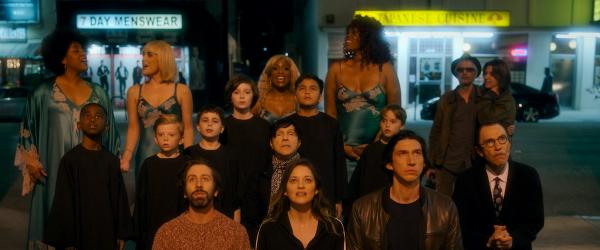
Metal My Movie: Annette
Death Kult Over Black Congregation: The New Wave of Chinese Black Metal
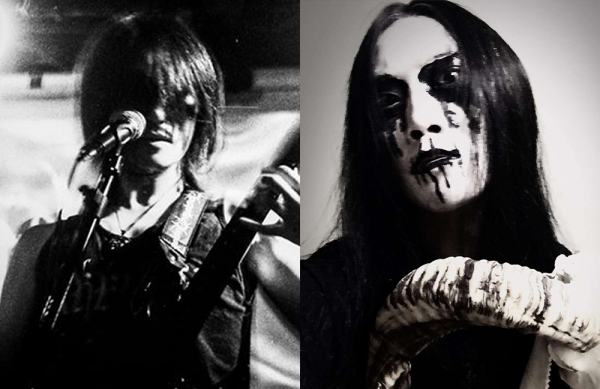
In 2019 and 2020, Pest Productions, A black metal label from China, released two compilations of emerging Chinese black metal on Bandcamp. New bands with a diverse range of black metal subgenres were introduced in the compilations, including old school bm, blackened death, dsbm, nihilist bm, black/thrash, post bm/blackgaze, symphonic bm, as well as folk bm, which gave birth to the New Wave of Chinese Black Metal. This year in January, Pest Productions have returned with the third compilation, bringing more talented Chinese black metal bands to overseas metal fans (I posted links at the bottom of the article of the three compilations which are free to download on Bandcamp). Based on this new extreme trend, I conducted this interview with two of my friends, AymParch and Dyingflames, who have been playing very active and important roles in Chinese underground metal communities.
DY: Can you tell us what are your roles in Chinese underground black and death metal communities and when did you both get involved?
AP: First of all, thanks for inviting us, really appreciate that. I’m currently working for Pest Productions (PR & promotion) and Dienysian Records (co-editor). Dyingflames and I got in touch and quickly became friends over a decade ago via some online forums. In 2015 we were invited by Zquagmire (another old friend and a very prolific artist in the Chinese extreme underground) to start a raw black metal project, together with Huai Wei (bassist for Black Kirin and Skeleton Augury). That project eventually turned into R.N.V. in 2017 when Dyingflames and I decided to start playing live shows. Right now R.N.V. is the main band I’m working on, with Nanjing-based bm veteran Lv Bo (复活 (Resurrection), Holokastrial, ex-Delirious) behind drums. There’s another side project I’m working on with Lv and that’s about it.
I was one of those close friends who joined Dienysian as co-editors after Dyingflames founded it around 2016. We have been long fans of Pest Productions and their music since we first got into the Chinese black/death scene. I met Deng, the owner, in 2016 at their 10 years anniversary show in Shanghai. Since then, I’d been helping Pest with some trivia like translating and writing promos, and eventually became an official member in late 2019.
DF: Thanks a lot for the opportunity here. I work for a venue and manage the shows every day, nearly half of the underground metal and punk shows took place at the club. AP and I are both in Dienysian Records and R.N.V. There is another band I’m in, Holokostrial, a Shanghai-based death metal band formed by guitarist Mammoth and me in 2014, also one of very few active death metal bands in eastern China. As for Dienysian, it is long time ago that I run a website page, maybe 2011 or earlier, we share metal album reviews (sometimes illegal download resources, I’m sorry) and recommend good bands from all over the world to our followers in China, then I changed name to Dienysian Records in 2016, and begin to hold some shows and release some music work.
It is the same time I met Deng Zhang, just like AP. The Pest 10 years anniversary show was really awesome, almost everyone was there. Deng really helps me a lot on label working, and Dienysian posted many reviews and interviews for bands and releases from Pest, during 2018-2020 we worked closely, then I shifted focus on shows.
DY: How does Chinese black metal distinguish itself from European or North American black metal? There are quite a few Chinese BM bands that have sort of Chinese traditional elements, and they also gained attention from overseas. But are the themes, or techniques different too?
AP: Music-wise, I don’t really see many differences to be honest, aside from those bands who manage to incorporate traditional Chinese elements into their music. One main reason is, after all, black metal is still a European genre, and we were more or less influenced by those classics and legends and their magnum opuses in the global scene. Also, Chinese BM is really diverse when it comes to writing styles and lyrics themes, so I don’t think there’s a distinct “Chinese sound” like that of Finnish/French/Icelandic BM – on that note, the situation here is somewhat similar to the North American BM scene.
DY: Since you’ve stayed in America and Canada, how do you find the black metal or death metal ambiances in North America different from those in China?
AP: Personally speaking, I think 2015 marks a turning point for the Chinese underground music scene (including the indie and punk ones), more bands and resources have been introduced to China due to the globalization of the music industry in general and the amount of efforts made by many great underground labels. But they still differ from those in North America since Chinese underground music, in general, is still a niche subculture, compared to the popularity of its NA/EU counterparts. In terms of audiences at shows, it’s really hard to pinpoint their exact characteristics either (China or NA/EU). I do think that the Japanese scene (audiences, livehouses’ general ambiance, etc) stands out as some of the craziest. We had a great time three years ago over there during our Japan tour in support of Cult Of Fire and Zurriake.
DF: Actually, big cities are pretty good, many famous or underground death metal and black bands toured in Shanghai, Beijing and Guangzhou in last 20 years. There are at least thousands of fans willing to pay for the show and other merches. When we took shows in other cities, things changed a lot, unlike NA, it is usual to find metalheads in almost every town or cities, fans are too concentrated in China.
DY: What are obstacles you met or black/death metal might meet in Chinese mainland? Back to few years ago, shows were sometimes cancelled due to “unseeable reasons.” How is the situation nowadays?
AP: Yes, censorship is definitely the biggest obstacle that show organizers and bands had to face prior to the global pandemic. We were once targeted by the local police and had to cancel our set. Fortunately, that didn’t affect the entire festival eventually. Great thing is, over the years, organizers have learned to cope with all the procedures, paperwork, and other nonsenses associated with live show censorship. I think Dyingflames can give you more detail since he’s super familiar with that.
DF: Obviously, censorship troubles us. In early days, 2012 or earlier, we can easily book shows we want without worrying about the date or place as long as it is not against government. My first band even played on a 400 people show at those years, our local newspaper posted it for promoting young culture. However, now we need to prepare the paperwork (ID, lyrics of course and more) plus lots of other sh*t, like audio or video of the songs we plan to play on stage, we send these materials to the Ministry of Culture and Tourism, and then wait one or two weeks for their opinions. Sometimes they don’t like the lyrics, though the lyrics has been “improved” and deleted all negative words. And sometimes they don’t like our dress, they want us to dress normal and keep our face and body clean.
The worst thing is “report.” Even though we have permission to hold shows, shows could be reported to police office or the Ministry I mentioned. It is not possible that every show we strictly follow the rules, so if someone is not pleased with us, we metalheads, or the loud music, etc, these can be reasons for them to shut down the whole show. Today we meet the challenge from pandemic and policy control as well, increasing the risk of cancellation, every show during these years is under this uncertainty.
DY: Did you collaborate with overseas bands? And can you tell us about the transnational practice of Chinese black metal or death metal in North America?
AP: Yes, Pest Productions has been working with tons of overseas bands since the beginning. You can check them out on our official webpage, or do a quick little search on Metal Archives. Some of my personal favorites among our recent foreign releases are the Canadian-based Nordicwinter and his side project Autumn’s Tomb, the Brazilian folk/black metal genius Kaatayra and his other project Vauruvã. We will soon release Kostnatění’s latest EP in collaboration with US-based Dissociative Visions (Mystískaos).
I think a good chunk of the younger generation is represented by some promising acts either living overseas or making music in a transnational way. Such as some of our most recent signings like Merrow, Tomblord, and Golden Cat Pagoda. In terms of overseas labels, Under the Dark Soil (based in U.K.) and WV Sorcerer Productions (based in Paris) are two of our long-time collaborators, both were founded by diasporic Chinese. Go check them out. From my own experiences, it’s much easier right now to compose, record, and share demos with bandmates over the internet than 10 years or 15 years ago. Only bad thing is, you don’t get to enjoy the cathartic fun of regular rehearsal and post-rehearsal drinking bouts that often right now.
DF: We interviewed and translated many classic articles of NA death metal bands in Weibo (Chinese Twitter), including some of the killer bands like Incantation, spreading seeds of pure darkness. It is more likely in the future we can see Chinese death metal bands working or touring in NA.
DY: How did bands and record labels tackle the pandemic in China? Are shows back?
AP: It’s the most difficult and the most annoying thing right now. Shows have already been back around late 2020, but right now everything’s so uncertain – many shows scheduled ahead could be canceled or forced to change lineups a couple of days before their scheduled date. We have had to already rearrange two major fests since 2022 because of last-minute imposed COVID restrictions.
DF: The shock does not take severely as we imagine, except the uncertainty of some shows, we are quite good. After all, the pandemic cannot make the censorship worse.
DY: By the end, can you share or give us a list of bands that we can listen to.
AP: I will mostly talk about bands under Pest’s own banner: Zurriake/Yngizarm, Black Kirin, Deep Mountains, Be Persecuted, Vengeful Spectre, Dark Fount (new album coming next month), E.D.I.E.H., Screaming Savior, Urizen Society, Holyarrow. Two young projects I think deserve more overseas attention are Vitriolic Sage and 景湖白 (Scenery of Pale Lake) – highly recommended.
DF: Mvltifission, Globularcyst, 毒蛊 (Dugu), Chaotic Aeon, Ululate, The Dark Prison Massacre, also The Illusion of Dawn, Suriel, Skeletal Augury from Pest Productions.
Links to the Pest Productions Chinese black metal compilations:
- Death Kult Over Black Congregation I
Pages



Staff Login | Advertise | Our Location | RSS | Contact Us
