RSS
November 1, 2011
Read by: Aisha Samu
Stories by: Niki Mohrdar, Jordie Yeager, Aisha Samu and Nikita Smith
Produced by: Carlo Spiridigliozzi
Arab League asks Syria to end assault on civilians
 The Arab League is asking Syria to strat a talk between its officials and members of the country's opposition for Wednesday.
This comes after the league asked the Syrian government to put a stop to all brutality against its people, as well as having all military vehicules return to their bases and political prisoners set free.
Monday was the first time Syrians met to write a new constitution. However, the news did nothing to calm the protests.
According to the Local Coordination Committee, Monday also saw 13 people killed across the country.
Over 3,000 people have died since mid-March, when the revolution against the government started.
While NATO condems the attack on the civilian population of Syria, it says it has no plans to intervene in the country.
UNESCO loses funding
After voting to grant full membership to Palestine, UNESCO has lost its funding from the United States.
UNESCO, or, United Nations education scientific and cultural organization receives a large part of its funding from the US.
The vote was passed with a strong majority with the notable exceptions of the US and Israel. The decision means this is the first UN agency Palestine has been recognized as a member in.
A 1990 law prohibits the American government from funding any UN member that recognizes Palestine. This means UNESCO will lose up to one fifth of its current operating budget.
UNESCO is best known for its world heritage sites. After the vote Palestinians are set to apply for world heritage status for sites such as the Church of the Nativity in Bethlehem.
Unlike a general assembly vote, the UNESCO vote did not allow vetoes. Every member got one vote regardless of size or influence. The US has already threatened to use its veto power if Palestinians attempt to join the UN in November.
If the US refuses to make payments to UNESCO for two years they will lose their voting rights at the next general conference but still be a member.
Montreal vaccination campaing begins
 Flu season is here and public health officials are reminding people to get their flu shots. The annual flu vaccination campaign begins today with the goal to get more Montrealers vaccinated.
One in six Montrealers are expected to contract the flu this season.
Infants between six and twenty-three months, adults over sixty, and those with a variety of illnesses are eligible for free shots. Pregnant women in their second and third trimester and those around newborn babies are also qualified for free shots.
Statistics show that the number of people getting the flu shot has dropped by fifty six percent. The amount of health care workers getting the flu shot has also dropped.
The Montreal Public Health Department is uniting with the CLSC and forty pharmacies to dispense the vaccine.
Quebec restaurants required to track sales
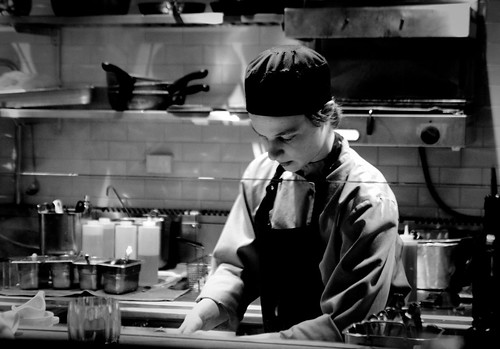 As of today, every restaurant in Quebec is required to have a machine that keeps track of sales. The machine is called a Sales Recording Module, and its purpose is to reduce tax evasion.
The provincial government estimates that around $150 million in sales goes unreported every year.
Restaurants that do not have the machine installed could face charges of up to $10,000. According to Quebec’s Restaurants Association, up to a third of the province’s restaurants still didn’t have the device installed earlier this month.
Association spokesperson Dominique Tremblay predicts that many restaurants will shut down in favour of tracking their sales.
Water warning in Montreal
 A boil water advisory has been issued in LaSalle and Lachine. It will most likely will not be gone until Tuesday at the earliest.
Once the samples of water from both of these boroughs have been inspected, action will be taken.
City officials say that this problem is because of water treatment chemicals being used incorrectly at a treatment plant in LaSalle on Sunday.
Roughly 80, 000 people are affected by this advisory. This includes homes south of St. Patick, west of Dollard Avenue, as far south as 80th Avenue and east of Dollard Ave to Lapierre Street. The north of Newman Boulevard is also included in this warning.
If you have any questions or concerns call the city at 3-1-1.
October 31st 2011
Produced By Melissa Mulligan
Read By Sarah Deshaies
Articles By Audrey Folliot, Esther Viragh, Daniel J. Rowe, Sofia Gay
Snowstorm hits US East Coast
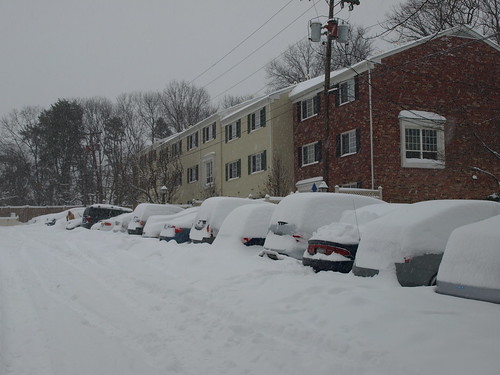 A snowstorm is passing through the US East Coast, killing at least nine people.
More than three million homes from Maryland to Massachusetts have lost electricity. Some houses may not have power for many days.
New Jersey, Connecticut, Massachusetts, and other parts of New York have declared emergency states. The Connecticut governor says citizens would still feel the effects of the storm even after it stopped.
In New York, it was the fourth snowy October day in a 135 years.
Most Occupy Wall Street protesters stayed put.
Wal-Mart is taking over
 Wal-Mart will be replacing the longstanding Zellers outlet in the Dorval shopping mall.
When they heard the news, some shoppers were thrilled while others weren’t as happy.
Some people defend the fact that Wal-Mart is a place where low-income families can buy low-cost products, but others think it crushes competitors.
Merchants from adjacent small stores fear they will lose sales and consider relocating their store when the Wal-Mart opens.
The Target retail chain bought most of the province’s Zellers, but the one at the Dorval Gardens is becoming a Wal-Mart.
In May, Target announced that it would take over nineteen Zellers in Quebec, and over a hundred and five in Canada.
Renovations are scheduled to start on January fourteenth.
The new Wal-Mart is set to open in the Spring of 2012.
Millions for Halloween
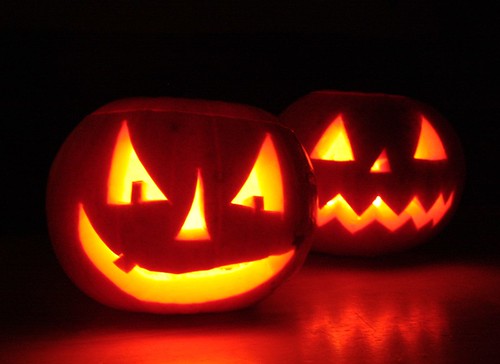 Quebecers will spend roughly $85-million on Halloween.
The Retail Council of Quebec commissioned a study. It found that over 25 per cent of Quebec households would shop for the holiday.
The CEO of the council said that after Christmas and back-to-school, Halloween is an important time of year for consumers.
Around $50 will be spent on costumes, $20 on decorations and $30 on candy in preparation for the event.
Pages



Staff Login | Advertise | Our Location | RSS | Contact Us
