RSS
Hiding from the Season with Montreal’s Frown Line, Joey Bird and Kelly Elizabeth
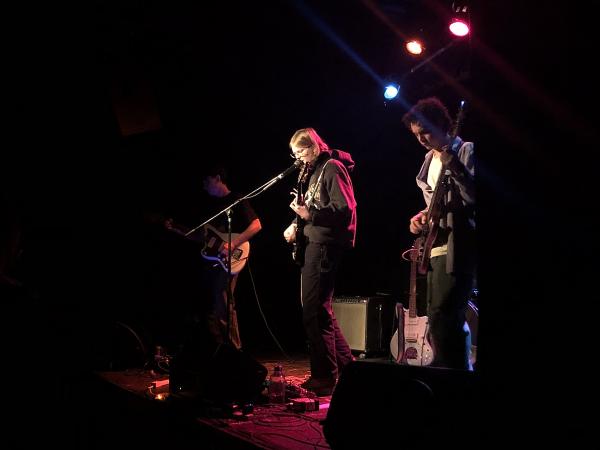
On Thursday, January 15th, I braved the elements and made my way to La Sotterenea for a show headlined by one of my favourite Canadian bands, Burs. I initially saw them in the Fall of 2024 and was very excited to catch them again following the release of their new album, Significance, Otherness. I would soon find out, upon stepping onto the metro to Laurier, that they were stranded in the snow all the way back in Toronto, and would not be making it to Montreal for their set. However, any disappointment I might have experienced on my way to the show was short-lived, and the concert by Montreal’s Joey Bird, Kelly Elizabeth, and Frown Line now ranks among one of my favourites I’ve seen locally.
The opening slot was filled by Montreal-based singer-songwriter Austin Pigott, who goes by the stage name Joey Bird. “I’m shy, and I’m nervous,” the singer admitted to the crowd between songs. A last-minute addition to the night’s lineup following Burs’ cancellation, Bird performed a solo set on voice and electric guitar. This opener was an excellent way to set the tone for the rest of the night, with a slightly timid, but never underwhelming brand of singer-songwriter folk. The combination of electric guitar and voice can be challenging, with the guitar sometimes taking over and drowning out softer voices like Bird’s, but the performance did not suffer from this at all. Bird more than stood up to the slightly distorted guitar, and I thoroughly enjoyed the performance. It had all the good qualities of a basement show at a party, and the songs were quite lovely. Halfway through this first performance, my friend pointed out that our view of Bird was framed between the heads of two lovers in front of us.
The night’s second act was Kelly Elizabeth, who captivated the audience with her introspective and tender brand of folk. The set began quietly with minimal instrumentation, and I was struck immediately by the singer’s voice, a low, almost conversational whisper reminiscent of Mazzy Star’s Hope Sandoval.
Later, when the drums and a slightly distorted lead guitar kicked in, there remained throughout the performance a kind of gentle quality to Kelly Elizabeth’s voice and stage presence. Admittedly, her voice was sometimes drowned out by the full band accompanying her, but never without reason. The instrumentation boasted creative chord progressions and a real ability to build tension while mostly maintaining the softness that made the songs so compelling in the first place. On a few songs, the singer performed solo on her acoustic guitar. For the most part, however, every instrument was carefully and progressively incorporated, everything in its own time.
At this point in the night, I was beginning to worry that I was getting too cozy to fully appreciate the performances I was hearing. The lights were dim, the music had been, up until then, quite soothing, the weather outside was quiet and snowy, and the couch I was sitting on was very comfortable. I was terribly and unmistakably sleepy. I did not have to worry long, however - only until Montreal rock quartet Frown Line walked onto the stage. The energy in the room shifted quite a bit, going from lovely and reverberant to the boisterousness one has come to expect from a performance at La Sotterenea. It was impossible not to get my second wind from Frown Line. The songs were an exciting balancing act between upbeat, complex guitar solos (sometimes with fun, twangy pedals!) and lead singer/rhythm guitarist Annika Devlin’s crystal clear voice. The band’s stage presence was both understated and playful, with two of the performers bursting out laughing in the middle of a song while still staying perfectly on beat. I was also especially struck by Frown Line’s creative use of rests in their songs, which gave their music an almost math-rock quality at times. That being said, Frown Line is quintessential Montreal indie rock, and it felt good to end the night in familiar territory, with such a beautifully performed set.
First Indie Show of The Year Includes New Music and a Border Mishap: Roxanne Izzo, Hearts of Palm, and I Love You Dearly at Casa del Popolo,
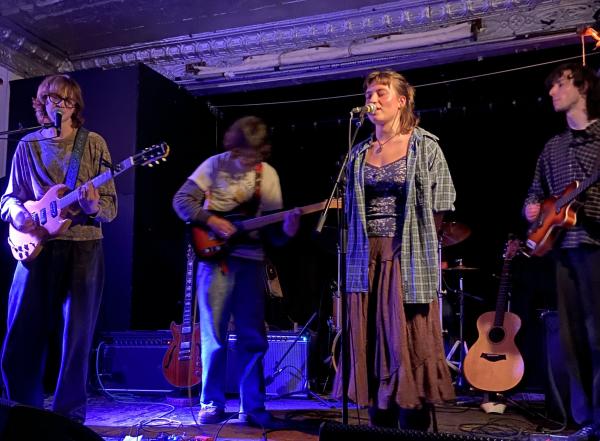
When my partner and I walked into the dimly lit, crowded and buzzing showroom of Casa del Popolo, coming in from a deep cold on a busy Boulevard St Laurent, I knew tonight was going to be lovely.
Stepping into the venue, we were greeted with many friendly faces - on the bill tonight was Roxanne Izzo and I Love You Dearly supporting Local Weatherman (New York), but unfortunately, Local Weatherman got stopped at the border and couldn’t make it in (because apparently any indépendant gig in Montreal is an “illegal show”? Get so serious right now.)
Luckily, the very beloved Hearts of Palm were able to step in at the last minute to round out the bill.
Roxanne Izzo opened the night with some very raw and energetic rockus singer songwriter tunes. Roxanne and her band, which includes her brother, made it clear that they were not new to the game. Roxanne embodied confidence in her voice and dialogue, and I was impressed when she spoke about the whole 2016 obsession this year, telling us she had written one of her songs that year, having now been a musician for over 10 years.
Those who were there for Local Weatherman may have been disappointed until Hearts of Palm captured the crowd with their thoughtful, humorous and vulnerable indie rock. with diaristic and playful lyrics, quality musicianship and rock-solid danceable arrangements. I think they not only opened up to a whole new group of fans, but for regulars and friends of the band, they nourished us with unreleased music! Excitedly, they announced that most of the bands on their label, local indie label Yapdog (who represent many beloved Montreal University indie rock scene bands like Love You Dearly, Dantes Paradise and Art Grey) would be putting out albums this year!
Last but not least, my dear friends, I Love You Dearly graced the stage, with this being the second set of the evening for a couple of them (you know how it is in these scenes), and it was the best welcome back to Montreal a girl could ask for. With their jazz-influenced, shoegaze-lite indie rock, they can’t help but move the crowd to dance with their incredible musicianship and that specific Vancouver kind of west coast ease. They premiered a couple of new songs that were faster and heavier than anything I’ve heard from them before, and all I can say is that I am deeply excited for whatever they’re cooking up this year. I Love You Dearly is my favourite band to dance to in Montreal, and I continued to dance all the way home through the snow that didn’t feel so cold anymore.
This Is Not a Review of the New Sleep Token Record
Well, I guess it's true that history is a cycle. I originally wrote this entire thing a week after Sleep Token released their latest record, Even in Arcadia, and then thought, "Why should I publish this? What is the point?" But upon reflection and seeing the band get a Grammy nomination, both in a metal and rock category, I thought maybe I should revisit this in case a flood of new think pieces come out saying how this is a horrible thing.
But let's get some things out of the way first.
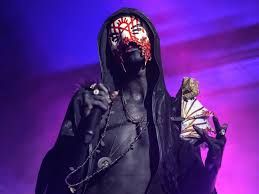
Sleep Token is an anonymous (even though they've been doxed) masked group of weirdos stationed in the UK, who have had a banner year off their fourth studio release. Don't mistake; I say weirdos with love here.
2025 has been big for them, as they put out a new record, Even in Arcadia, and as someone who has been listening to this band since before Sundowning was released, I think the record is pretty good. Admittedly, it's not as good as their last, Take Me Back to Eden, which, incidentally, has recently reached number one Billboard status with a vinyl reissue. It feels more like This Place Will Become Your Tomb, a middle album designed to connect two other records, and therefore not as strong as its sandwiching records. Still, it mixes djent, ballads, hip hop, trap, and RnB into a delicious slurry that sounds unique to the metal landscape. It also managed to snag the number one Billboard spot for both the UK and the US, and have some of the largest album sales for anything under the rock umbrella for the past two years.
TL;DR: It's a good record from a band doing something different in metal that people seem to like.
But this is not a review of the new Sleep Token record.
Now, before I continue, let me be clear. I actually don't really care if you hate Sleep Token. You can actively dislike any band you choose, and that's fine. I've been calling them "Elven John" since this record came out, and heard the prominent piano in "Damocles", and you can feel free to steal that and use it as you see fit, positively or negatively. I myself hate many bands and the music they make, sometimes with no real adequate reason, and that's okay.
So it was that, as I was listening to the record again on the way to work and contemplating how this band has galvanized the metal community, it occurred to me that I wasn't listening to a new, well produced record by a hot metal band that has managed to bring in new fans and managed to snare a headlining spot at Download Festival, one of the UKs largest rock/metal fests. No, in fact, I was listening to a flashpoint, a new chapter in a common and depressing metal argument. This was, in fact, the new "not metal band".
Let me explain.
The "not metal band" is a band that, for whatever reason, manages to gain popularity among people outside the metal community, and, through this process, becomes not metal. This can be an immediate dislike, such as with every band that has the audacity to be heavy, but still palatable by the mainstream (see: every radio "butt rock" band). It can also happen to bands over a gradual period of time as they gain popularity, such as with Ghost, the last not metal band to dare to make music that could be enjoyed by people outside of metal. It can even happen if other elitists try to jump onto a band, such as the case of Deafheaven releasing Sunbather and the indie rock Pitchfork crowd actually liking it.
In any other genre, these situations would be celebrated as wins; other people coming in and noticing a genre that they are less familiar with would supposedly be good for that genre. Afterall, it expands the audience and shows there is an appetite for something that people may have overlooked or dismissed.
But this is most definitely not the case in metal. People discovering and trying to get into metal should be a win. It should be what people strive for. And in fact, this attitude does not happen in other genres.
When Charlie XCX put out brat this year, an innovative album that mixed up multiple sub genres of pop and dance music, I didn't hear any chatter about how someone liking the album meant they "didn't really like pop music" or that they were clearly "some pop poser". Pop fans were not saying, "Well, that isn't REAL pop. True pop is what Cyndi Lauper was doing in the 80s."
Hell, I know metalheads who LOVED that record and would proudly say so, but, more importantly than that, it isn't the first time that metalheads decided to deride another genre of music for its exclusionary practices.
Remember last year, when Beyoncé released a country record? I saw members of the metal community say, "It's really not fair that country stations and the Country Music Association aren't recognizing Beyoncé since she's mainly from another genre." Of course, that was smugly followed by, "But, I guess we should expect it, amirite? You know, country people and how they exclude people that aren't already in the scene, especially if they look different from anyone else that has prominence."
But it's very hard to take these stances seriously when "trve cvltists" will not just take a shot at a band, but people who would dare admit they like a band. These fans of whatever particular pariah band the community have decided are "not worthy," will dismissively say, "Well, people who like not bands don't REALLY like metal, so they aren't part of the community and their opinion doesn't matter."
And this is not just reserved for single bands and their fans. As we all know, bands exist within genres, and there are entire genres of "not metal". Hair metal, screamo, metalcore, and, of course, who can forget nu-metal, which was pilloried until the recent new nu-metal revival and all the contrarians came back to say they actually liked nu-metal all along.
So we must ask ourselves, what do all those genres have in common? Well, they aren't musically the same, clearly. The time periods aren't the same, so that's not it. I'm going to oversimplify a bit here, but these genres and bands do have something in common, and that is simply that they became popular to people outside of the metal sphere.
"Well, no, it's because they're not heavy, you fool."
But is that it, Strawman in a battle vest?
Heilung, Emma Ruth Rundle, Alecast, Opeth's middle to late discography... none of these are the heaviest things that have ever come out, yet they are still under the metal umbrella, and there is very little argument in the community about that.
"Well, all those things are just unoriginal."
Oh, I see Strawman. Nice obscure band patch you have there, by the way. So then, let me pose this question to you: Is the same black metal record that is trying to be Emperor from the 90s original? The countless thrash bands that desperately want to be a Bay Area band from the 80s? That's what originality looks like? The death metal bands that can't even seem to get a different font for their band names are original? How many stoner bands are LITERALLY trying to be Black Sabbath, and they get a mammoth pass?
The truth is, metal fans don't really like innovation. Metal fans like slight variations on things they already like.
And, that's okay. That's actually pretty normal. But it is very difficult for you to convince me that you like originality when a band dares to do something unique, gains some popularity, and they get shunned by the community.
"Well, everyone knows that if a lot of people like something, it isn't good."
Strawman, c'mon... that's a real argument you're trying to make? Because let me tell you, the inverse is also not true. Just because a majority of people don't like something doesn't make it good either. And, further to that, if you're actively trying to keep people out unless it's on your specific terms, you are not a welcoming, open-minded community.
I'm not sure if everyone else has noticed this, but metal and its fans are getting old because that's how time works. It's also no secret that metal does not have the drawing power that it did in its heyday. Now, I could make a very salient argument that 44% of tickets sold to attend Download Festival this year were to first-time attendees, but I'm sure that has nothing to do with a popular band that younger fans enjoy headlining on one of the days.
And before you simplify in order to misrepresent my argument, is Sleep Token the only reason that is happening? Of course not. But having a band that for a while was all over TikTok headlines certainly didn't deter young people from going to a festival, and I'm not sure how you could argue otherwise.
Now, if you're a fan of metal, the above info should fill you with a bit of hope. Young people might take up the torch and actually keep the genre going with fresh and interesting ideas, and take something you care about and breathe fresh life into it... If they stick around, that is. Because you know what has never helped to make people stay in the scene? The elitism that metal has cultivated through its outsider mentality.
Speaking of, one argument someone threw at me was that Sleep Token was, and I quote, "diluting metal," as opposed to other bands that were "distilling metal," citing slam as an example of the latter in relation to death metal.
Now, I find this argument not even worth engaging with, but apropos of nothing, hey, did you also notice that metal has a higher amount of real Swastika wearing, piece of shit Nazis versus other music genres? There is literally a subgenre of black metal, National Socialist Black Metal, that is dedicated to espousing the most heinous and stupid ideas the worst and dimmest among us want to put forward. Do you think that these drooling simpleton white supremists feeling free to form an entire subgenre and flaunt it in and among the community might... maybe... possibly... have something to do with the fact that metal purposely and actively tries to discourage new people from joining? Does it try to actively keep out "undesirables" and will describe something new as "diluting" the purity of a proud lineage they think themselves a part of?
Just to be clear, because if I don't make this point, this will all be written off as entirely invalid, I am not saying that if you like metal or are even just your run-of-the-mill elitist, you're one of these Nazis. What I am saying is that this attitude of exclusion and looking down at people as inferior doesn't exactly make people who hold similar ideas in other areas feel as unwelcome as they should. In fact, some of these, and I will be generous here, "problematic" artists are not shouted down, and, in fact, are actively venerated. Alex Terrible in Slaughter to Prevail had a Nazi tattoo, and even though he now says he made "bad decisions in his youth," he doesn't really go into detail about what that means. Phil Anselmo of Pantera has done multiple Nazi salutes and been known to throw out racial slurs, and then hides behind "being drunk". People are wearing Burzum shirts to shows with no shame, but I'm sure this list of non-exhaustive examples is just nothing.
But fine. Make the same "poser leave the hall" comments and make sure to express that all other people are not worthy to stand next to you in liking something. You're doing your part to try to keep people here by making sure they feel unwelcome. That is what metal is for, right? Exclusively for the outsiders, those shunned by society. "You must be this socially awkward to hear these blast beats," right? It would be funny if it weren't so deeply sad.
What will welcoming these people do to metal exactly? Will it mean that Methwitch won't continue to make music that sounds like hell made real? Will it mean power metal will have to stop singing exclusively about dragons, fire, and metal? Will it mean Cannibal Corpse will suddenly have a lead singer who is obsessed with adorable plushies? Well, if you're worried about the last one, I've got bad news for you, sunshine.
No, none of the terrible things you envision will come to pass, just like it didn't when Metallica became a worldwide phenomenon. Just like it didn't happen when nu-metal brought hip hop and metal together, much to the chants of purists saying, "Keep your rap out of my metal." We've seen this all before, and metal has not diluted from it. It has become stronger, better, and taken more seriously as an artistic medium.
And if you do think that metal will be lost with this influx of new sounds and ideas, then you shouldn't be here. I would rather stand with a Sleep Token fan, hungry to discover new things and maybe only dip their toes into metal, than to listen to the same musical cliches that you can't and seem hellbent to never let the genre change or evolve.
And so let me end this by turning around the popular thing that I have seen bandied about metalhead circles:
"People that gatekeep and actively shit on people for their musical choices... They don't REALLY like metal. They should leave the hall, for they are not the trve cvltists that metal deserve and their poser opinion does not matter."
Andrew Weiler is the host of Grade A Explosives, on-air Sundays from 4-6 pm. He is also the Metal Director at CJLO.
MTELUS Reaches Euphoria Under Snow Strippers’ Spell

Walking out of Saint Laurent metro, it wasn’t hard to spot who was headed to the Snow Strippers show. Fuzzy leg warmers, mini shorts with ripped tights, and spiked hair all moved excitedly towards MTELUS. Under the venue’s painted ceiling stood a growing crowd, with sunglasses in their hair and plastic cups in their hands. The night was very much young and alive, as conversation mixed with electronic pop resonated across the room.
The room was full as Anna Luna began the show, her silhouette emerging in clouds of smoke as she danced on stage. The hyper-pop and electronic princess blended dreamy vocals with a heavier electronic sound with tracks like Rotten and "So High". Her reverbed lyrics lingered through the venue as strobes pierced the haze, setting the stage for the euphoric evening. Hands swayed in the air, eye makeup smudged from sweat and heat of the night, and the smell of cigarettes was unavoidable yet welcomed - The scene felt like something out of a Skins episode. Behind the DJ deck was Los Angeles producer Eera, who followed with his own hypnotic set. Despite the doors having opened hours ago, spirits and energy were high, bodies pressed up against each other moving as one.
As 10pm came around, three drinks deep, a Crystal Castles track playing through the speakers faded as the room turned black. As Tatianna Schwaninger and Graham Perez stepped onto the stage, effortlessly commanding the venue under pulsing red and purple lights, seconds seemed to slow down. Snow Strippers started with the chaotically explosive "Just Your Doll" as everyone in the room jumped around. The moment felt like a dream, as the audience was mesmerized by the duo’s perfectly chaotic and messy nature. Despite oxygen feeling sparse as bodies pushed and shoved against each other, the heat of the moment seemed to only add to the euphoria. Vocalist Schwaninger seemed untouchably cool, dancing around the stage in her red top and shorts, glitchy vocals flooding the room as Perez was stationed behind the deck. Lights swirled behind them as the crowd accompanied the duo through every note, beat and breath. Phones, old digital and VHS cameras swayed in the air, all wanting to capture the moment, though none could come close to capturing the night’s essence. Tracks melted into each other, the night passing in a blur.
As Schwaninger sang the eclectic and raw "So What If I’m A Freak" into the room, the audience sang every word back. The track is unapologetically messy, loud and chaotic, well encompassing the Snow Strippers aesthetic. As the track’s sample from a viral YouTube video I’m with the suicide squad brought the song to its peak, the duo took the whole room on a trip, whether you were high or sober. The show was surreal, as tracks like "Know My Name" and "Aching Like It’s swallowed the crowd". After many tracks spanning across their discography and repeated alarm and gunshot effects, with sweat clinging to skin and an aftertaste of tequila, the energy reached its peak as the familiar "Under Your Spell" started playing. Imposing lights consumed the venue, the smoke thick as the duo’s silhouettes cut through the haze. As they performed their most popular song, it was difficult to properly see them because of the sea of bodies moving up and down – yet you could still feel the ecstasy of the moment as the ground shook through chopped vocals and synths.
The night ended unapologetically loud and messy with the explosive Castle, the duo drowned in the flashing stage lights as spilled drinks covered the floor. The aftermath of the night lingered outside the venue through the groups raving about the show over a joint outside or the two girls singing "Know My Name" in the metro - Snow Strippers proved that Indie Sleaze is in good hands.
McGill’s Lilith Fair Returns Bigger and Better in 2026
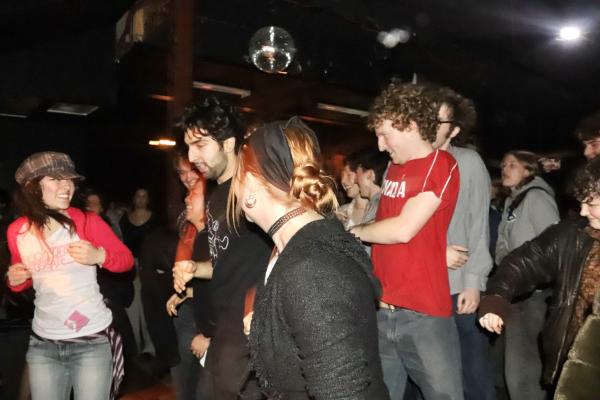
As a first-year student at Concordia, I’d never been to McGill’s Lilith Fair, though I’m aware that it happened last year as well. This mini-festival, organized by the McGill Collective for Gender Equality and McGill’s Jam for Justice, is inspired by the original Lilith Fair, founded by Sarah McLachlan in 1997. Her goal with this festival was to promote female artists and address gender inequality in the music industry. To do this, she selected only female artists or female-led bands to perform, which McGill’s lineup reflected as well (with the addition of queer-led artists as well). This year’s sets were absolutely fantastic, with Night 1 showcasing Boyish Apocalypse, PascalePascale, Fionavair and Bebe and Oona; and Night 2 with 2kyerg, Angela Bégin (CJLO DJ!!), Palomine, and Niivi.
I was attending Lilith Fair on behalf of Palomine, a McGill band that only started performing in 2025 but has been doing shows all over Montreal (and the occasional Ontarian city). As I’m friends with one of the frontmen, I was asked to take photos of both Lilith shows, which I immediately said yes to. I’ve seen Palomine a few times, so I am a slight superfan, but I had never seen some of the bands before, and I was not disappointed.
I’d seen Niivi two summers ago in Ottawa at one of their first gigs (maybe it was their first ever), and they were just starting out. The singer, Niivi Snowball, is an Inuk musician whose music is centred around their Indigenous culture and the struggles they’ve faced because of this. Extremely emotionally charged, their songs were angry and loud but also extremely beautiful. Headlining Night 2, as was deserved, this band has improved so much since their first show. With a new guitarist and drummer, their set was incredibly fluid. Many of my friends were remarking on the skill level of the band, and the rest of the audience seemed to respond extremely well, dancing and moving the whole time.
Palomine, performing right before Niivi, definitely set them up for success. Every time I see this band, they get better. I especially love bringing my friends to see them because I know no one will ever be disappointed. Palomine’s songs are so intentional and atmospheric, often quite long and mostly full of beautiful instrumentals. It’s easy to get lost in their music, yet I find myself always fascinated by every part and every instrument. They gained a fifth member in the last couple of months, so they’re on the larger side, but by no means excessive. Every aspect feels very necessary. I would highly recommend a Palomine show to anyone feeling uninspired or low, as I guarantee a surge in passion and overall joy afterwards. Though no matter your mood, this band will certainly be enjoyed whenever and is one to look out for.
PascalePascale is also hugely inspirational for me. This was my second time seeing her, the first was when she opened for Palomine in early November, a show that arguably might’ve changed my life (I’ll avoid being dramatic). Performing mostly solo and sometimes with a band, Pascale has mastered the art of riffs and rhythms. Her songs aren’t overcomplicated, but they’re almost sneaky, featuring a sudden harmonic or chord change when you’d least expect it. Her music is so hypnotic and incredibly moving that I often find myself sitting in an excited anticipation of where each song will go. Especially seeing her now with a band, there was a moment where the entire crowd reacted to a change in the song, which was so cathartic. It is euphoric moments like these that are so unique to live music, and Pascale delivers them every time. I can't wait to see what she does next, and I’m sure I’ll be increasingly impressed.
If it wasn’t obvious, this experience was incredibly rewarding. I’m constantly astounded by the music scene in Montreal, especially student-led bands. I struggle to understand how anyone has time to organize these events while juggling their academics and personal lives. However, you wouldn’t know that any of these artists were students based on how professional and practiced they present themselves. I’m sure Lilith Fair will return next year, EVEN bigger and better. I feel so lucky to have attended, and to anyone who didn’t know about it, look out for it next year!
Quinton Barnes Helps Me Understand the Meaning of Life
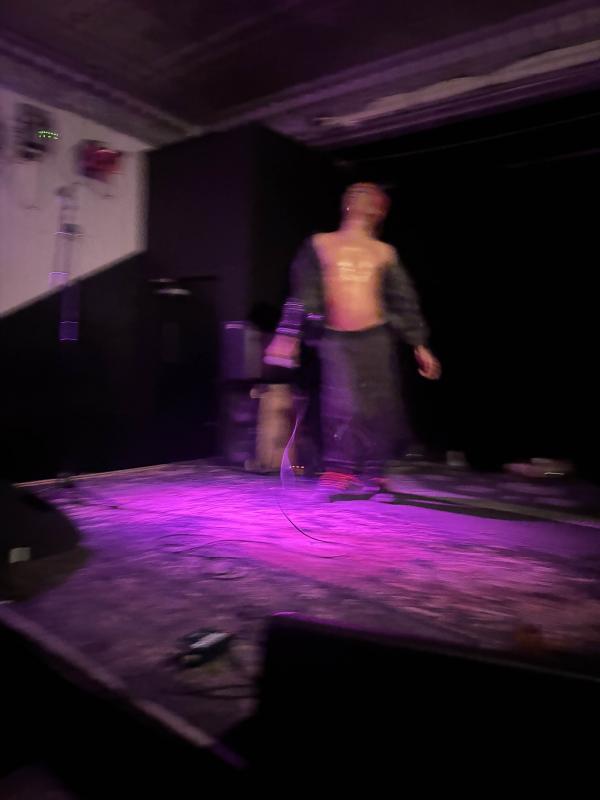
A few days before Quinton Barnes was set to perform at Casa Del Popolo, I listened to Quinton’s most recent project, Black Noise, an album characterized by the unsettling cacophony of orchestral instruments inspired by Miles Davis, overlayed over an otherwise beautifully produced album. On the day of the show, I woke up at 6 in the morning to catch a rideshare from Ottawa to Montreal. At around 7:30, right at the Quebec/Ontario border, the driver hit a patch of ice going over 100 km/h, lost control and swerved off the side of the road, nestling itself in a snowy ditch, leaving us unscathed. I had narrowly escaped death, I should have been overjoyed, but instead I found myself sobbing on the side of the highway. The realization that my life could be taken away at any moment, without preparation, that I could never be fully in control over whether I lived or died, filled me with dread.
As the concert drew closer, the uncomfortable saxophone runs, the erratic screams of the trumpets, and the screeching strings that I remembered from Black Noise played through my head. While I knew it might not be the easiest listening experience, I walked into the bar with confidence and made my way to the front of the crowd, knowing that I was prepared for what was to come…or so I thought. Quinton Barnes walked up to the stage, plugged his phone into the sound system, and affronted the audience with booming 808s, otherworldly synthesizers, distorted samples and an aggressive style of rapping. This was not Black Noise; this was something totally different. Life had taken me by surprise once again, and it wouldn’t be the last time that happened that night.
In the first half of the show, Barnes performed songs from “For the Love of Drugs”, which, according to the artist, takes inspiration from industrial R&B, hip-hop, electronic artists like SOPHIE and Arca, Afropessimism and “a loud ass disruptive baby.” I found myself bobbing my head to the incredibly heavy and grimy instrumental on “To Freedom”, but it was when the song suddenly switched to an elegant, synthy, beautifully sung melody that I realized how truly talented this artist was. As the night went on, Barnes continued showcasing his versatility. Elements from the Southern Trap movements of the early 2010s appeared on songs like “Stunner” and “Scenes Of”, while the ethereal production on songs like “Fuck On U” turned the room into a dream sequence.
Throughout the show, Barnes occupied the instrumental breaks with energetic and explosive dancing. Despite this, the crowd remained stubbornly still, as if in direct defiance of Barnes’ enthusiasm. This all changed when “LaLaLa”, the first track of the album CODE NOIR, blasted out of the speakers. An uneasy feeling spread throughout the room as if we were all thinking, “Uh-oh, am I gonna start dancing too?” As Barnes continued performing his catchy electronic dance songs, the crowd started to stir, the tiny backroom of the bar morphed into a Boiler Room set, and time seemed to stop. Soon, the whole room was dancing as if in a trance, and I was enthralled. Through both his infectious rhythms and his visually stimulating stage presence, Barnes could make any crowd dance, and I suspect it won’t be too long until every club in the city will be scrambling to book him.
In the days following the accident, I came to the realisation that the unexpected is what makes the human experience as beautiful as it is tragic. Not knowing what will happen next is part of the fun, and I believe that there are very few people on this planet who could have made me understand this better than Quinton Barnes. When his show finally ended, I realized that for the second time that day, I had lost control over my own life, and I couldn’t have been happier about it.
It’s Marty Supreme, It’s Marty Supreme: A Review of Marty Supreme
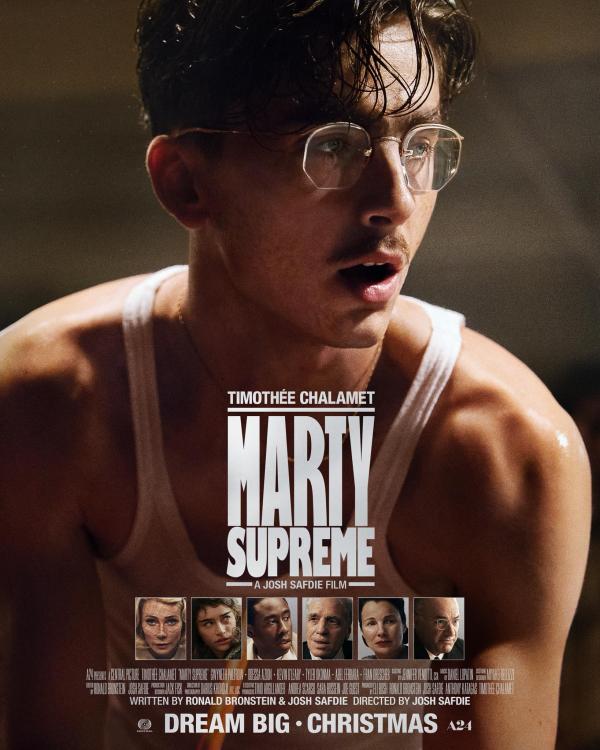
The press tour for Josh Safdie’s new film, Marty Supreme, is virtually inescapable. Perhaps you’ve seen the orange blimp flying over the southern USA. Or the viral colour-block windbreaker worn by a motley list of celebrities ranging from Patti LuPone to Bill Nye to Frank Ocean. Or star Timothée Chalamet rapping a verse on EsDeeKid’s “4 Raws”, which is my personal favourite of the film’s idiosyncratic promotional stunts. Underscoring this marketing extravaganza is Chalamet’s insistence on his own excellence. With his declared ambition to be considered “one of the greats,” Chalamet sets a high bar for his performance—a bar which he extraordinarily exceeds, cementing his status as a generational talent.
Marty Supreme follows Jewish-American Marty Mauser (Timothée Chalamet) as he endeavours to prove to the world what he unwaveringly believes about himself: that he is the greatest ping pong player ever. The film begins with Marty as a silver-tongued shoe salesman working for his uncle Murray (Larry ‘Ratso’ Sloman), and his first lines spoken are lies to a customer about shoe size. Enter Rachel Mizler (Odessa A’Zion), the fiery married woman with whom he is engaged in an affair. After the two have sex in the shoe store’s stockroom, an inspired opening credit sequence plays, during which Rachel’s freshly fertilized ovum transforms into a ping pong ball. The film’s first act sees Marty rob the shoe store at gunpoint to retrieve $700 (which, to be fair, he is owed) and fly off to compete in the British Open. Marty beats the reigning champion, Hungarian Holocaust survivor Bela Kletzki (Géza Röhrig), but is ultimately defeated in the finals by the deaf Japanese newcomer Endo (played by Koto Kawaguchi, who is also a deaf table tennis player in real life). Broke and humiliated, Marty tours with the Harlem Globetrotters as a farcical sideshow act in order to scrounge together enough money for transportation to the next year’s table tennis championship in Tokyo.
What follows is an odyssey at breakneck speed: Marty runs from the police after his uncle has him arrested, Marty learns Rachel is pregnant with his child, Marty owes $1500 to the International Table Tennis Association, Marty accidentally gets involved with mobster Ezra Mishkin (Abel Ferrara), Marty hustles with cab driver Wally (Tyler Okonma, AKA Tyler, the Creator), Marty begins an affair with former movie star Kay Stone (Gwyneth Paltrow), Marty is abjectly degraded by Stone’s megalomaniac husband Milton Rockwell (Kevin O’Leary), Marty repeatedly devolves himself into deeper and deeper debt. Josh Safdie co-edited the film with longtime collaborator Ronald Bronstein, and the result is electric, gripping audiences from the very first shot and leaving no time for respite. At every turn, audiences don’t know what to expect; the only certainty is Marty’s unyielding conviction of his destiny, and his willingness to exploit and sacrifice anyone and anything to realize it. As he says in one scene, when Kay Stone asks him what he plans to do if his dream doesn’t work out: “That doesn’t even enter my consciousness.”
Safdie and Bronstein also co-wrote the film and created the character of Marty Mauser for Chalamet specifically. While Marty Supreme is ultimately Chalamet’s show, his performance is thrillingly matched by Odessa A’Zion, who plays Rachel with such ferocity that scenes between the two are nothing short of exhilarating. Gwyneth Paltrow is masterful as Kay Stone, conveying her character’s underlying need for love with a steady confidence. Aided by his persona as a ruthless investor on Shark Tank, Kevin O’Leary’s performance as Milton Rockwell is bone-chilling. The film’s soundtrack is replete with songs from the 1980s, reflecting Marty’s fixation on his future grandiosity, his conviction that he is miles ahead of those around him, and his refusal to occupy himself with past or present happenings.
Set in 1953, just eight years after the Holocaust, Marty Supreme is fundamentally a secular Jewish story about chasing assimilation in a society that continues to sideline you. Marty imbues himself with a messianic purpose, driven by a pathological need to vindicate the Jewish people from their perceived weakness following the Holocaust. He calls himself “Hitler’s worst nightmare.” He gifts his mother (Fran Drescher) a piece of an Egyptian pyramid that he hacked off while touring with the Harlem Globetrotters and forcefully proclaims: “We built that.” The weight of six million dead Jews propels his dogged determination to prove himself, not only as the greatest ping pong player in the world, but as a beacon of American exceptionalism.
What makes the film’s tagline, “Made in America” so poignant is that Marty’s brash conviction of his primordial superiority is what makes him so American after all.
Marty Supreme is currently playing in cinemas.
CJLO YEAR END TOP 100 OF 2025
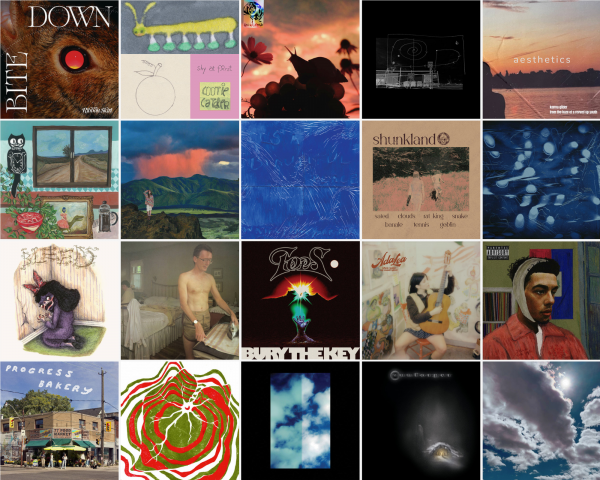
We made it to 2026! Every year it feels like CJLO is getting bigger and better. From filling our schuedule from 10AM-10PM, to multiple packed concerts, to the most successful funding drive in station history, 2025 had a lot to be proud of. As we look back on 2025, lets also give a nod to all the amazing local, underground, and otherwise just awesome albums our DJs have spun in the past year. From the explosive rise of Geese, to new albums from station legends like No Joy and Kestels, to Ribbon Skirt's miraculous run, holding down both the #10 and #1 spots, CJLO kept its finger on the pulse all year long.
Take a look through the top spins of 2025 tay tuned for everything your favourite campus-community radio station has in store for 2016!
-
Ribbon Skirt - Bite Down
-
Cootie Catcher - Shy at First
-
No Joy - Bugland
-
Fencing - Fencing Wikipedia
-
Karma Glider - From the Haze of a Revved Up Youth
-
Casper Skulls - Kit-Cat
-
Marlaena Moore - Because You Love Everything
-
Water From Your Eyes - It's a Beautiful Place
-
Shunk - Shunkland
-
Ribbon Skirt - Pensacola
-
Wednesday - Bleeds
-
Men I Trust - Equus Asinus
-
TOPS - Bury the Key
-
Ada Lea - When I Paint My Masterpiece
-
Mike Shabb - Shabbvangogh
-
Eliza Niemi - Progress Bakery
-
Hotline TNT - Raspberry Moon
-
Joni Void - Every Life Is a Light
-
Sunforger - Auspices
-
Kestrels - Better Wonder
-
Big Thief - Double Infinity
-
Bluffing - Nature
-
Geese - Getting Killed
-
They Are Gutting a Body of Water - Lotto
-
Bracelet - I Hear Bracelet
-
Shallowater - God's Gonna Give You a Million Dollars
-
Bonnie Trash - Mourning You
-
Quinton Barnes - Black Noise
-
Choses Sauvages - Choses Sauvages III
-
Swimming - Old
-
Heaven for Real - Who Died and Made You the Dream
-
Birds of Prrrey - Birds of Prrrey Live from CJLO
-
Earl Sweatshirt - Live Laugh Love
-
Whitney K - Bubble
-
Wombo - Danger in Fives
-
Prism Shores - Out from Underneath
-
Backxwash - Only Dust Remains
-
Mike and Tony Seltzer - Pinball II
-
Hanorah - Closer Than Hell
-
Last Waltzon - Wethouse
-
Living Hour - Internal Drone Infinity
-
Maddie Jay - I Can Change Your Mind
-
Alex G - Headlights
-
American Lips - On Strike!
-
Poolgirl - I Can't Swim
-
Nicholas Craven & Boldy James - Late to My Own Funeral
-
Nourished by Time - The Passionate Ones
-
Blood Orange - Essex Honey
-
Helene Barbier - Panorama
-
Panda Bear - Sinister Grift
-
Mares of Thrace - The Loss
-
Quinton Barnes - Code Noir
-
Tim Hecker - Shards
-
Lifeguard - Ripped and Torn
-
Funeral Lakes - Mountains Turned to Dust
-
Milk & Bone - Baby Dreamer
-
Peace Flag Ensemble - Everything Is Possible
-
Sunwell - Sunshine, Etc
-
Yeule - Evangelic Girl Is a Gun
-
Stereolab - Instant Holograms on Metal Film
-
Mike Shabb - Fight the Power!
-
Marie Davidson - City of Clowns
-
Daffo - Where the Earth Bends
-
Oklou - Choke Enough
-
Ichiko Aoba - Luminescent Creatures
-
N Nao - Nouveau Language
-
Nadah El Shazly - Laini Tani
-
The Weather Station - Humanhood
-
Fly Anakin - (The) Forever Dream
-
Teethe - Magic of the Sale
-
Basia Bulat - Basia's Palace
-
Bleary Eyed - Easy
-
Swans - Birthing
-
Yoo II avec Nolan Potter - Yoo II avec Nolan Potter
-
Fine Food Market - I'm Afraid to Be in Love with Someone Who Crashes Their Car That Much
-
Bambii - Infinity Club II EP
-
Superstar Crush - Way Too Much
-
Franki - All the Things I Try to Say
-
Cameron Winter - Heavy Metal
-
Still Depths - Like Hell
-
PUP - Who Will Look After the Dogs?
-
Common Holly - Anything Glass
-
Jim Legxacy - Black British Music (2025)
-
Frog - 1000 Variations on the Same Song
-
Thanya Iyer - Tide/Tied
-
Bloodshot Bill - So Fed Up
-
Alix Fernz - Symphonie publicitaire sous influence
-
Saya Gray - Saya
-
Destroyer - Dan's Boogie
-
Quadeca - Vanisher, Horizon Scraper
-
Blooming Season - In the Presence of Another
-
Greg Freeman - Burnover
-
Momma - Welcome to My Blue Sky
-
Propagandhi - At Peace
-
Foxwarren - 2
-
Sadboi - Dry Cry
-
Isabella Lovestory - Vanity
-
9Million - 9Million
-
Debby Friday - The Starr of Queen of Life
-
Matt Jencik and Midwife - Never Die
Aviva Majerczyk is the head music director at CJLO 1690AM. She is also the host of The Alley, a folk-rock show airing Fridays at 11:00 AM.
The End of the Internet…or Is It?

Over the past decade, we have tacitly acknowledged that online, we are the product. Our search histories and scrolling habits are being sold, not just to corporations, but also to government intelligence agencies. Relinquishing any modicum of privacy feels so inevitable that most of us passively surrender our online data to the ownership of a few major internet conglomerates. Dylan Reibling’s 2025 film, The End of the Internet, which screened at the 28th annual RIDM (Montreal International Documentary Festival) back in November, provides a glimpse into various resistance groups around the globe operating decentralized online networks to resist this data control.
Instantly positioning the consolidation of internet power as problematic, the film opens with an anecdote about the so-called “Google Maps War,” in which an armed conflict was nearly incited between Nicaragua and Costa Rica due to Google Maps mistakenly labelling Isla Calero as Nicaraguan territory. The film then attempts to demystify how the internet operates by describing network nodes, undersea fibre optic cables, and internet exchange points, showcasing how the centralized internet leaves users vulnerable to cyber attacks and control of information.
The crux of the film introduces five decentralizing movements seeking to preserve ownership of data in the hands of the user. Mimicking the experience of surfing the web, the film bounces between communities in Germany, Brazil, Hong Kong, Catalonia, and Miami, offering cursory glances into the internet experiments occurring within them. In the social media age, when our shortened attention spans have been tirelessly memed and editorialized to the point of tedium, this spasmodic structure is well-suited. That said, the most common refrain I overheard when leaving the theatre was that people wished the film selected a subject to focus on in further depth.
In the director’s statement published on the film’s website, Reibling writes that the objective of the decentralizing groups is “to rewire the internet in the service of freedom and equity.” This prescription undoubtedly applies to a platform like Mapeo, a peer-to-peer mapping tool used by Indigenous communities in Brazil to ensure that information regarding locations of various natural resources is protected from government seizure. However, the film spends significant time on the decentralized personal server platform Urbit, a platform which decidedly opposes those professed ideological claims.
Urbit was co-founded by Galen Wolfe-Pauly and Curtis Yarvin, the latter of whom has amassed a loyal following as a far-right political pundit under his pseudonym Mencius Moldbug. Yarvin argues for “neocameralism,” a political system that abolishes liberal democracy and replaces it with a patchwork of city-states each owned by a CEO sovereign. Yarvin is essentially a technofascist who is on the record saying that he is “not exactly allergic” to white nationalism, among other reactionary statements. These might sound like the ravings of a lunatic, but his ideas are endorsed by some of the most influential members of the American ruling class, including Vice President JD Vance and his puppet master, Peter Thiel. Yarvin’s social vision is inextricable from Urbit, as the network’s hierarchical structure materializes neocameralism on a virtual scale.
Yet, Yarvin’s neofascistic social vision is only briefly mentioned in the final minutes of the documentary—a choice which, combined with the film’s presentation of Urbit in an identical manner to all other networks presented and the inclusion of Urbit’s literal marketing materials, leaves viewers with what is functionally an advertisement for the platform.
I left the documentary feeling rather helpless, as while some of the decentralized movements Reibling shows are fascinating and commendable, the documentary gave no material advice on how an ordinary girl like me can seize control of my data and protect against corporate and government surveillance. Urbit is the most accessible decentralized option covered in the documentary, which frankly feels like that “the illusion of free choice” meme where a cow sees two hallways that lead to the same dead end—in this case, the dead end is a technofascist future where my mortal enemy Peter Thiel reigns supreme.
The End of the Internet screened at the 28th annual RIDM and is streaming on MUBI.
Dijon Commands L'Olympia with Unpredictable Energy
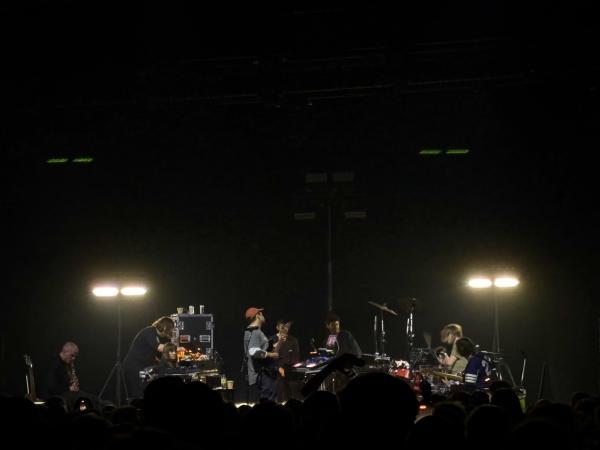
Most people have at least one artist they tell themselves they must see live one day. Some years they just don’t come to your city, or the dates don’t work out, or the album releases don’t come as often as you’d hoped. But finally, on a Friday in late November, as I was standing at the back of a crowd, eyes very slowly closing and opening again, looking around at the marvel that is the L’Olympia venue, I had experienced that sweet satisfaction of checking Dijon off my list.
Around mid-August of this year, I took two of my best friends to my late-grandmother’s home on the waterfront of Mayne Island, BC. After a day of whimsical, child-like fun that felt like four days squished into one, we sat in front of the TV and watched Dijon’s short film: Absolutely. It makes me emotional every time I see it; a stunning live performance of tracks off the 2021 album that can’t be described as anything else but raw, musical magic. My friend Aliyah is sitting on the floor, and we realize Dijon is going on tour soon. She says, “If I can’t get tickets for the Vancouver show, I’m coming to Montreal.” And that she did, along with my partner from Ottawa, making for a night I knew would be filled with love, beaming light and memories.
Dijon’s style has become increasingly polarizing, and he wears it on the sleeve of his live performances. Whereas his debut album, Absolutely, was tender, soft, and heartbreaking, Baby packs a punch that hits you from all angles. Its radical leap from the acoustic and mellow tones is unapologetic. Drums and random vocal snippets played loudly between tracks, making for almost no silences throughout the entire show. Even when starting it off with the song “Many Times” from Absolutely, it was fast and loud and had a totally different feel, making you wanna jump up and down rather than hold your head in your hands.
But it wasn’t complete chaos. It was like a mature tenderness that embodied themes of sacrifice and of changing life stages, the album being named after his son and the music reflecting that transition. The intense sampling from the recorded album is amplified in the performance and fills the whole space with sounds from all directions, with a mesmerizing light show that flashes on cue. My face hurt from smiling, and everyone else around me was beaming. It was hard not to be pumped up for whatever would come next.
Dijon also has a uniquely passionate voice. My boyfriend Caleb and I joke about how he sings in cursive, which you could hear so crisply through the loudspeakers. Like his close pal Mk.gee, he’s not afraid to screech and yelp between words. Even in the slower songs, where he sang low and soft, the light in his voice never dimmed, and his eyes were squeezed shut with intense focus. I’ve got to give props to his drummer, too, who was grooving to the music the whole time with his cymbals positioned high as hell.
With Dijon growing in popularity, even gaining the title of Pitchfork’s “Artist of the Year” for 2025, I’ve sometimes contemplated whether his new direction in music is still for me. Music rooted in spontaneity and an improvisational nature can be destabilizing, making you rethink where you stand with the artist and if what they think is working, is really working for you. Seeing someone you admire perform live can settle that, I think. Intently watching how they move through the process, interact with the crowd, their instruments and their collaborators is telling.
The story Dijon told that night gave me all the assurance I needed. You can tell he cares, maybe too much and to his own fault. I read Paul Thompson’s Pitchfork article that talks a lot about his struggle in crafting this album, but it seems to have paid off. His on-stage crew were smiling ear-to-ear watching him sing, and the interactive nature between them was lovely and free. There wasn’t a ton of crowd interaction as I’ve seen in clips of his other shows, but I was there for the music, which was strongly delivered.
Pages



Staff Login | Advertise | Our Location | RSS | Contact Us
