RSS
Myles Smith Leaves Montreal Slightly Less Lonely

Halfway through the first leg of The Slightly Less Lonely Tour, Myles Smith stopped in Montreal for the first time on Saturday, October 26th. The tour, sparked by his TikTok successes and his breakout hit “Stargazing”, drew a passionate crowd to the Theatre Beanfield, eager to experience his emotional and personal sound live.
Smith opened the show with a story that many found relatable, sharing how just 13 months prior, he was working nine-to-five, yet felt compelled to take a leap of faith into music. Little by little, he built up the confidence to pursue his dreams—a journey the audience felt a part of as he shared his music and stories.
As a long-time concertgoer, I can confidently say this was one of the best shows I’ve attended, partly due to the show’s impressive punctuality and professionalism. Opening act Lily Fitts, an up-and-coming indie-folk artist, took the stage right at 8 p.m. Her set, a mix of released singles and unreleased gems, was the perfect blend of introspective lyrics about relationships, both romantic and platonic, leaving the audience wanting more. Fitts wrapped up her set with a cover of Noah Kahan’s “Stick Season”, a sweet touch that brought me full circle since my first-ever concert, in 2019, was Kahan on that very same stage.
At 8:45 p.m., the band appeared, decked out in Canadiens jerseys, with Smith himself sporting the expo’s: Guerrero’s number 27. They opened with “River”, a powerful song choice that hinted at the raw emotion Smith would pour into the night. He followed with a haunting cover of “Sweater Weather” and then played his song “Solo”, stripped down to just Smith and his electric guitar before the rest of the band joined in. This interplay between solo moments and full-band builds continued throughout the night, creating a dynamic, and captivating experience.
Between songs, Smith shared deeply personal stories, connecting each to universal themes of love, loss, and growth. In one particularly profound moment, he performed “My First Heartbreak”, an acoustic unreleased ballad about his father. The crowd held its breath as he played, absorbed by the vulnerability of the moment. At the end of the song, he thanked the audience for the safe space we’d created, one that allowed him to share these personal pieces of his life.
One of the most memorable moments of the night was when Smith encouraged the audience to turn on their phone flashlights if they had ever felt alone or struggled with their demons. “And now,” he said, “in a moment of bravery, I just want you to show every single person here your light.” The arena glowed with tiny, flickering lights, each a symbol of shared experiences and resilience. He followed this heartwarming moment with his latest release, “Wait for You”, leaving a lasting impact.
Throughout the show, Smith’s connection and appreciation towards his fans was clear. He even performed “Stargazing” three times, each time with a different twist. The second time, he surprised everyone by jumping into the crowd and singing along with his fans, who were overjoyed to be part of the performance. Later, he asked the audience to put away their phones for one chorus to experience the music solely within the room. Even Lily Fitts joined him for this acoustic moment, creating a magical atmosphere where everyone sang and danced together. As the night wound down, Smith made a point to thank his band, crew, tech team, and venue staff for their hard work. Watching him interact with his bandmates and share hugs at the end, I could tell this tour wasn’t just about him—it was a collective journey with everyone involved.
Smith also surprised the audience with an announcement about his next project, titled A Minute, scheduled for release on November 8th. The news, now official, hints at an exciting new chapter for Smith. As I left the concert, I couldn’t shake the feeling that I had just witnessed something extraordinary. Smith’s openness, his gratitude toward his fans, and his raw, soulful music left a permanent mark. In a world that often feels divided, Smith’s concert reminded us all that we are, in fact, slightly less lonely.
It’s not too late to see Myles Smith live on his debut tour. He’s coming back to Theatre Beanfield next Wednesday, November 6th, and also stopping at MTELUS during the second leg of his tour on Friday, April 18th, 2025. Don’t miss out and get your tickets now!
Empress Of's Birthday Eve Show at Bar Le Ritz
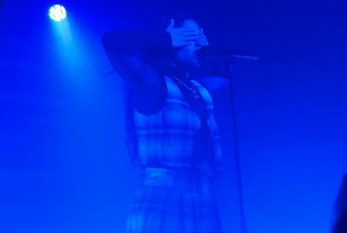
Empress Of’s birthday-eve show at Bar Le Ritz closed out the North American leg of her tour for her newest album For Your Consideration. The show was opened by Casey MQ, a former Torontonian DJ turned Los Angeles producer, whose soft vocals cooed into the microphone and coaxed the dispersed audience toward the stage. In the crowd of 30- to 40-something-year-olds I could hear whispers about his Club Quarantine project, a Zoom-based nightly club created by a group of Torontonian hyperpop-y artists in the early days of COVID lockdown. Club Q’s popularity grew exponentially, starting in March of 2020 with ‘crowds’ barely passing 100 screens, to hosting big-name artists like Charli XCX and Alice Glass in April, capping out the Zoom attendance limits at 1,000. As one of the early attendees of Club Q, it helped buffer the adjustment from partying five nights a week as a first-year university student to staring at a screen for any form of social engagement. It's been really heartwarming to see Casey MQ go from being a shy DJ partying online with his friends to living in Los Angeles as a producer and releasing his own music. Though I’ve never been a big fan of his music, which feels too much like Taylor Swift’s 1989 era to me, I appreciate seeing how far he's come. In his performance, Casey repeatedly switched from standing with the microphone to sitting next to his laptop playing a keyboard. This felt sweet but a bit awkward, to constantly be shifting positions; and while he didn’t have much to say he was very appreciative of Empress Of for being brought along on this tour In my opinion, sometimes it's best to stay quiet rather than repeat oneself when on stage.
Once Empress Of came on stage, in a matching plaid top and side-split pleated skirt, the audience was full and concentrated in the front. Unlike many concerts I’ve been to there was no weird two-foot space between the stage and the first row of onlookers. Perhaps it was Bar Le Ritz’s layout or the quality of fans present, either way, it was refreshing to not have to awkwardly shuffle forward when the performer asks you to come closer. Empress Of immediately jumped into playing songs from her newest album, For Your Consideration, released this past spring, and the remix album at the beginning of October. She only stopped to greet the crowd and introduce her multi-instrumentalist behind her after her second or third song, as if she wanted to slam us into dance rather than build up anticipation as some artists do. Her one-woman band was Cecilia, one of the most beautiful people I’ve ever seen. She stood to the side of center stage and created the entire sonic landscape by playing keyboard, Moog, guitar, looping vocals and controlling drum backing tracks. Empress Of declared herself a yapper, and when Cecilia found her talking too much between tracks she would just start playing the next song. It was a really cute dynamic, and I couldn’t tell if the sexual tension was between Cecilia and Empress Of or the audience collectively thirsting over the two beautiful and talented women on stage.
This was the last set of the For Your Consideration North American tour, and the night before her 35th birthday, she made this clear by going hard. She had a plethora of self-choreographed dance moves and would repeatedly pick up a fan on the floor and raise it up above her head to blow through her hair before setting it back on the stage to blow her skirt up, Marilyn Monroe-esque, showing off her leather underwear. The set list for the show was wonderfully inclusive, with lots of songs from the newest album, her hits from the past that transported me back to high school feels; and songs from her 2020 album I’m Your Empress Of. These included her “theme song” as she described it, along with audio clips of her mother, during which she would raise her hands up in gratitude towards the hanging speakers. One thing I found exciting was her inclusion of songs she had recently featured on like Shygirl’s 4eva and Kito’s Wild Girl. I’m not used to artists performing songs they feature on without the main artist and I really like it, especially since I’ve seen Shygirl perform 4eva at the Charli XCX x Troye Sivan Sweat tour this past September.
I enjoyed thinking that I may have been the youngest person in the audience, it felt nice to be in a friendly crowd with no need to fight to keep my spot in the front. There was a gay couple in front of me, who would occasionally turn to each other to make jokes and giggle, very adorable; and an older woman in her 50s next to me who, during her favorite songs, would reach her arms up and lose herself in dance. It was a really sweet crowd of fans who knew the lyrics to everything, from newer songs to hits from 2017. However, in recent female-fronted concerts, I’ve noticed an uncomfortable trend of one normal-looking guy (ie. not one of the girls or the gays) standing in the dead center of the front row, holding a phone out and recording the entire concert. I don’t want to assume anything but I do find it strange, like, if you’re so obsessed with the artist, why don’t you put your phone down and enjoy the concert in the moment? I’ll never understand behavior like this, but I’m biased, I even feel embarrassed to pull my phone out to take the picture that is required for these write-ups.
The Art of the Unconventional: Experiencing Xiu Xiu Live and In Album
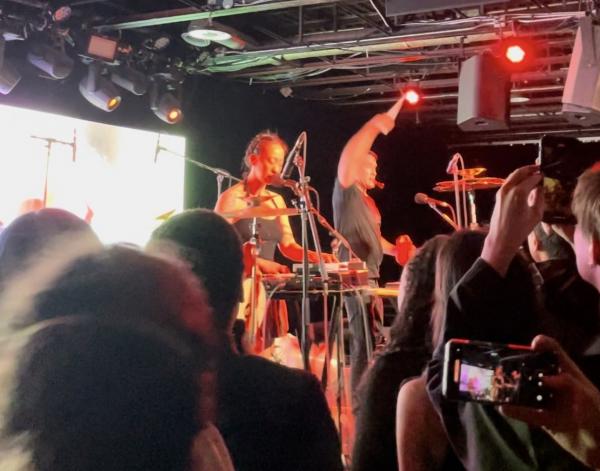
Few bands have the ability to create music that feels like both a confessional and a confrontation, but Xiu Xiu’s artistry does just that. Xiu Xiu performed in Montreal on October 18th, less than a month after releasing their latest album, 13” Frank Beltrame Italian Stiletto with Bison Horn Grips, marking another milestone for the California-based band that has been around since 2002. Using a mix of haunting melodies and experimental sounds, Xiu Xiu’s performance was definitely memorable; their set that night journeyed through complex and layered compositions that have become Xiu Xiu’s trademark, shifting from atmospheric to intense with seamless transitions.
The intermission music after the opening act, Picastro, finished their set was classical violin, featuring songs like Tabula Rasa: I. Ludus, which heavily contrasted Xiu Xiu’s performance. The music fluctuated from soft and lulling, to loud, pounding, and even angry, often within the same song. A captivating element was the act the guitarist and lead singer Jamie Stewart put on, moving his whole body by jumping, kicking, acting grandiosely and making dramatic gestures in key moments. His performance was even humorous at times, like when he pranced across the stage with an instrument on his head. It is also an extension of their music, which is very exaggerated and striking. The kind of music they create would be considered experimental, unconventional, even avant-garde as it mixes noise with pop sounds, which Xiu Xiu is no stranger to, as they have covered many songs from pop (and other) artists like Rihanna.
In between tracks, there were meaningful pauses of silence, which were likely intentional, to make each song more poignant and moving. Interestingly, in these moments, the band interacts with the audience as they must also remain silent. When some concertgoers were speaking loudly during a beat of silence, they were called out and told by Jamie that if they were louder than them, they were too loud.
The songs that stood out to me were the ones that had upsetting themes of sexual violence and evoked true, harsh screams from Angela Seo, vocalist and multi-instrumentalist. One track in particular stood out to me, Wig Master, which is on their 2006 album The Air Force, but blended beautifully with the rest of the set. It was performed very differently from the way it was originally recorded; it debuted with a vibrator being taped onto a cowbell, creating a rhythmic beating quite jarringly paired with the painfully loud and intentionally jolting sounds of the song. The song is likely meant to cause discomfort as it recounted a painful experience, and some lyrics were vocalizing disturbing thoughts, which certainly took me aback, but made it all the more enthralling! Some members of the audience were laughing probably out of discomfort, and others were plugging their ears as the music was noxiously loud, which again was intentional in getting the message behind the song across. The use of the vibrator as an instrument references a project Xiu Xiu did in 2015, where they taped 999 pink vibrators to a Danh Vo “We the People” copper sculpture, recorded different tracks, and named the album Kling Klang.
It seems as though 13” Frank Beltrame Italian Stiletto with Bison Horn Grips is Xiu Xiu’s most exploratory and maximalist project to date, bordering on rock, but twisting it into something else entirely. This album reflects Xiu Xiu’s unique style, which is innovative, blurs lines and rejects simplicity. Tracks like “Common Loon”, which is very upbeat and vibrant, contest what we have previously seen from Xiu Xiu, which tends to be more melancholic and dark. Themes in this album touch on love, sexuality, and self-acceptance, which is not unheard of in their discography, but they have touched on much darker things like suicide and abuse. Drummer David Kendrick’s contributions bring new energy to tracks like “One Maestro Chord” and “T.D.F.T.W.” (The Devil Forgiven That’s Why), which maximize percussion and vigour, and contrast other tracks like “Sleep Blvd.”, which uses synth, and is significantly softer and dreamlike.
Watching Xiu Xiu perform live is less a concert and more a visceral experience; their willingness to explore difficult subjects, combined with their dynamic range of sound, made their performance a whirlwind of emotions that left a lasting impact. The interplay between vulnerability and aggression captures the essence of their artistry, inviting audiences to not only listen but to feel deeply. For anyone seeking a profound musical experience that challenges perceptions and evokes emotion, attending a Xiu Xiu concert is highly recommended.
David Cross Band's Four-Hour King Crimson Cookout
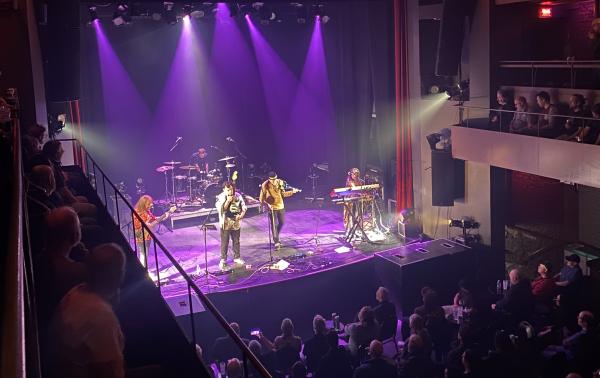
David Cross Band’s performance at Club Soda was one of the most alienating evenings of live music I have ever endured. It was in most ways, objectively lame, but much of it was so endearing or otherwise strange that this feeling of inadequacy was easy to forget about. I have seldom felt so out of place in my entire life. I went expecting some great music and left satisfied in the part of my brain that loves not knowing what is happening.
I found out about the show a week before it happened through one of the poorest Instagram advertisements I’d ever seen. It was a fuzzed-out video with the words “David Cross Band plays King Crimson’ over it. It was the kind of thing I could have made on my iPod in three minutes at age ten, and I didn’t even know who David Cross was.
David Cross was the violinist for the legendary King Crimson between 1972 and 1974, which in my young opinion is their greatest run of records. King Crimson is a band that’s extremely hit or miss for me, but some of those songs are worth any opportunity to see played live, due to their grandiosity alone. I’d pay money to see any group of guys play “Starless”, and David Cross himself being there was just a plus. The post’s description promised King Crimson alumni playing Larks’ Tongues in Aspic (1973) front to back, as well as ‘most’ of Red (1974) and Starless and Bible Black (1974). The word ‘most’ frightened me, as this is prog rock, so even one song each from those other albums would add a good 30 minutes to the show minimum. I was in for a long one.
My friend who’d agreed to come cancelled on me last minute, and after 20 minutes of calling people with invites, I gave up and just went alone. This actually added to my experience, as sitting through the four-hour show without anyone to quip at was maddening to the point of hilarity.
When I arrived at Club Soda, I realized I was in for something new. The floor where I’d planned to stand was full of little lounge chairs and beer tables. People were sitting around, chatting and drinking as if in their own backyards. They had successfully turned Club Soda’s energy into that of an indoor cookout. I was an outlier in the audience by having hair. The distilled culture of aging Quebecois prog-heads all washed over me in an instant, in all its tough love glory. The audience was filled with wives and sons dragged by weirdo fathers proclaiming, ‘I know you don’t like my music, but you have to see this.’ I wasn’t sure yet what being there said about me, but I wasn’t about to be the only one without a beer.
I got a nice seat in the upstairs section. It was the first time I’d ever poked around up there. The openers were a band called Miriodor, from Quebec City, who announced that they don’t play very often anymore and that this was a special occasion. It was soon obvious that for those in tune with Quebecois prog-rock, (a deceptively large community outside of Montreal) these guys were the real deal. I wouldn’t doubt it if you told me half of the audience was there simply to see Miriodor, who’ve had an active, however aging, cult following for over 40 years. It’s a great thing when a band achieves perfect morphological homogeny with their audience. If any player swapped with an audience member while I wasn’t looking, I’d never notice. They all had that rough-edged but quiet barbecue swagger about them.
Miriodor’s music was about what you’d expect from a niche band stuck in the 70s. Apocalyptic, multiphase riffing. Quirky, shifting melodies and rapid chord changes. Some long droning passages with synthesizers. One song opened with a bizarre series of samples including opera singing and a car crash. The crowd seemed to love it and that’s what’s important, this never could have been my scene. A man screamed out so loudly and inappropriately during one of their songs that I saw him being scolded by his wife in the audience. Based on their music alone, you can tell Miriodor are King Crimson worshippers, and that this self-proclaimed rare appearance of theirs is a big night for them. I can’t imagine what it’s like to finally open for your heroes at such an old age. Their teen summer flick had its credits roll in their 70s. It’s possible that makes the payoff even more worth it, and that is a beautiful thing, even if it also took them this long to get the girl. After playing their final song, a perk to a seated audience revealed itself, and the band got a standing ovation.
Between acts, I went for a little walk to catch my breath and mentally prepare for another three hours of music. As I walked, I immersed myself in some of the drunkest people I have ever seen. Nobody’s wives looked impressed. Back inside, the venue played both a song with the Soviet Union’s anthem as a guitar solo, and Pink Floyd’s Animals, which people sang along to. There was weight to the culture I had accidentally barged into, and the people were ready for some prog.
The David Cross Band stepped onstage and immediately carried on the feeling of the openers. David himself was elegantly suited and wearing a fedora. A real bloke. He was slightly hunched over but looked very good for his age overall. The man is a 75-year-old rock violinist, and that is something I’m sure the world is quickly running out of. After playing an original song that I didn’t recognize, he announced the names of every member of the band. They looked very thrown together, all being of different ages and dressed for different eras of rock music. I’m sure every one of them has an interesting story as to how they ended up playing with this band, but here it just seemed like a jumble of random folks plus a former King Crimson member, whose presence added more absurdity than star power.
David Crossed off the center square of Montreal concert bingo by attempting to speak French and thanked us for giving them our ears before getting into the King Crimson stuff. First, they played The "Great Deceiver", the opener from Starless and Bible Black, which he announced by saying he couldn’t remember the name of. I couldn’t tell if that was meant to be a little nudge to the superfans in the audience to call the name out or a genuine admission of a mental blank. Next, they played Red’s first track, and I started to really get into it. Despite having 3 alternating vocalists, their singing was always the weakest part of the performance. Every time they’d play a purely instrumental track, I found myself appreciating it a lot more, Red was the first of these moments.
They announced that they’d play one more non-King-Crimson song, called "Calamity". David Cross explained the song’s metaphor before even playing it, likening a relationship to a shipwreck. The song was terrible, and, along with the beer-foamed cheer the relationship joke got from the audience, really made me question what I was doing at this show. The fact that I’d frantically looked for somebody to bring along became absurd. They were losing me again.
David Cross then announced that it was time for us to go on a journey, unambiguously calling for the beginning of Larks’ Tongues in Aspic. On record, the album starts with a hypnotic Mbira (Kalimba) symphony. When every member pulled out a tiny thumb piano and awkwardly played it into their singing microphones, I was overcome with joy. Two hours deep, I felt that I could sit through another two.
Everything they played off the full, central album was gold. Many of the heavy parts involved wild, distorted playing from David Cross and his tiny green electric violin, and he could really play. His playing peaked on "Exiles", the album’s third track, with its beautiful sun-touched string leads and slow melodic builds. Mick Paul, the bassist, with his often-dull singing voice did a very good job on this track as well. I was able to immerse myself in the drama of it. A lot of King Crimson’s music walks a delicate line of trying hard to sound grand, beautiful and baroque without crossing over into sounding stupid and pretentious. This line is sometimes crossed even on their albums. That tightrope is much thinner at what amounts to a glorified cover band, which makes the moments where they do pull it all off all that much more impressive. Between passages of songs, there were several moments of sprawling improvisation. These were the moments when the tightrope snapped, and what they were trying to accomplish was never possible. They simply didn’t have enough chemistry as a band, and it always brought me back to the small-town local cookout vibe of the whole thing.
After "Larks’ Tongues in Aspic, Part Two", the album’s chaotic final track, the band all joined hands and bowed as if on their opening night for a high school play. They didn’t bother with waiting for the audience to urge an encore, as the flyer had promised a lot more music. I was quite tired by then and decided that I would stay until they inevitably played "Starless", which is by far my favourite King Crimson song, and one that nails that mysterious, larger-than-life alien creep so effortlessly, it never bothers me how full of itself it really is. I imagined that they’d save this song for last, which they did, but I did not expect it to be up next. When the opening strings welcomed us to its desolate sound, I felt a genuine rush of excitement. Robert Fripp’s iconic guitar tone on the recording has always been one of my favourite aspects of the song, and I, unfortunately, cannot say that John Mitchell had the same majesty in his performance. His vocals sorely lacked in the same way. Luckily, these were my only complaints about their performance of "Starless", and those only affect the first section of the song. The slow, anxiety-inducing climb toward the song’s climactic breakdown was something of awe, and people cheered throughout anticipating its release. That final burst of energy could never disappoint. I closed my eyes for a short while during the apex and was taken away from the barbecue and towards my idea of seeing the real King Crimson live back in the 70s. This was, after all, the closest I’d ever get. They even managed to nail some grinding, heavy improvisations before their grand finish.
After the band bowed again, and I headed outside, I witnessed a concertgoer in such a furious argument with his wife that he pulled his pants down and mooned her publicly. It was the final piece clicking into place to reveal the true nature of this strange subculture I’d naively peered into. My place in it all still leaves me wondering.
Concordia student unions campaign to restore shuttle to full service

Multiple groups at Concordia are working to convince the university to restore full service for the shuttle bus between the Downtown campus and the Loyola campus.
Back in June, Concordia announced that the shuttle bus which students use to get between the two campuses would reduce services. The bus now only runs from 9:15 am to 6:30 pm, making commuting difficult for students with early morning and late evening classes.
Since the announcement the Concordia student union has been gathering testimonials and petition signatures to restore the shuttle busses early morning and late evening service. The petition currently has 1500 signatures and 500 testimonials.
The cuts to the shuttle come as a result of Concordia’s current financial crisis. In its budget announced in May, Concordia forecasted a deficit of $78.9 million by the end of the 2024-25 school year.
Concordia told CJLO they are aware of the campaign and have no intentions of restoring the service, saying the cuts save them money.
Sueco Surfs The Night Away
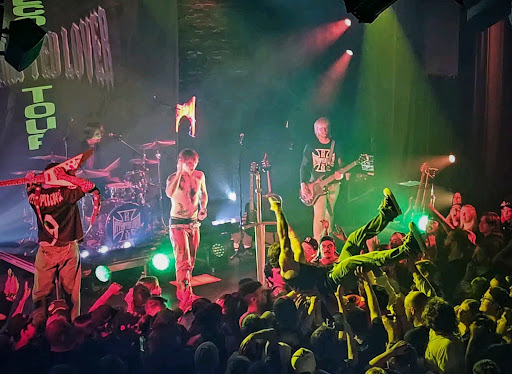
For his first time in Montreal, Sueco took the stage at Le Studio TD for a roaring Tuesday night on The Attempted Lover Tour: The namesake of his most recent album.
William Schultz grew up playing the guitar and writing his own songs, before beginning his career producing beats, then inevitably, releasing his own music. Adopting the name Sueco, his career took off five years ago and the passion of his fans has not dwindled. As soon as the doors opened at 7 pm, the line of fans that had gathered on the block eagerly stormed to the stage, no barricade in sight (which did become an issue later on).
It was my first time attending a show at Le Studio TD and I wasn’t expecting it to be such a small venue, especially given the closure of the balcony that night. Sueco was able to interact with fans, which made for a more intimate experience. Accompanied by his band, Jumbotron James on guitar, Christian, or Dr. Zombie on Drums and Jordy the Blond on Base.
While most people I had met around me were friendly, by 8:30 pm the tension had risen within the crowd in anticipation for the start of the performance. People were feeling angsty, so much so that a fight broke out a couple of feet from me. Luckily, all was forgotten by 8:45 pm, when Sueco opened with “Bathroom Floor” and “Anastasia”, two songs from his newest album, followed by a throwback single, “Story Of My Life (feat. Trippie Redd)”. The crowd was going feral, pits were moshed, heads were banging so much that I can only imagine the pain they’d feel the next morning, and let me tell you; there was a lot of surfing. Sueco even brought out his CROWD SURF 9000, a board designated for surfing the crowd. Lifted by his fans, he moved through the room, all while performing his breakout single “Fast” which blew up on TikTok in 2019.
Fans followed by example, and many surfed their way to the stage throughout the rest of the show. It was definitely the most energetic concert I’ve been to, with fans putting their all into every song that was performed. During Sueco’s interaction with the crowd, fans were often trolling, yelling unique profanities, but the artist took it with grace and played along. He was just happy that his “beautiful family was getting bigger every day.” Lost in a sea of white, red and black, there were fans of all ages — from middle-aged rockers, young adults, and a couple of parents with their gangs of kids. Two of them were Johnny and Sadie, who were attending their first-ever concert, with a front-row view. Their names were chanted in celebration, which made their night all the more memorable.
During his last song, “Paralyzed”, Sueco separated the crowd and started his own mega-mosh pit, giving us rules to make it both as safe and as crazy as possible. At the end of the show, when everyone began chanting for an encore, some of the audience (which snowballed into the whole crowd) began asking for two songs. Sueco came back to the stage for an encore, “Mulholland Drive”, and finally closed the night with “Motel 666”.
Overall, I enjoyed the show and its contagious energy. The size of the venue contributed to that as it felt more like a small community, and fans were able to connect with the artist, especially in comparison to much larger venues. It was beautiful being an outsider of this hardcore fandom; enjoying the music, but being able to watch a crowd sing with their artist and feel their feelings.
Danny Brown Demonstrates His Legacy at the SAT Space
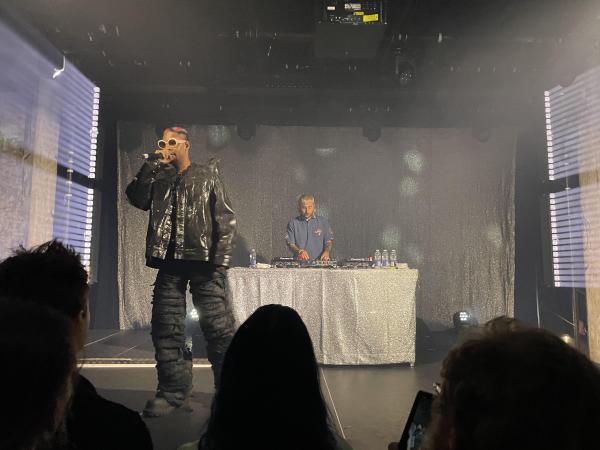
For over a decade now, Danny Brown’s name has been unavoidable when discussing the state of modern hip-hop. Catering to a more dedicated audience than your average rapper, Brown has carved a name for himself as a legendary MC, rapping with ease over beats that would give your favourite lyricist a heart attack. Coming off the release of his most personal release yet, 2023’s Quaranta, I was able to catch Brown at his stop last Thursday at the SAT space, and man did it kick some ass.
The positioning of the SAT space has always irked me a little; squished tightly between climbing gyms and hot dog restaurants, the space feels far removed from the venue-heavy north side of Rue St-Laurent. The inside, however, is perfect for someone like Danny Brown. The room is tight-packed and industrial, with a stage that is close enough to the crowd to feel intimate, but far enough away that it still fosters a sense of sensationalism from its performers (Bar Le Ritz, take notes!) Upon entry, the genre of this show was immediately recognizable; lining the barricade were faces recognizable from the MAVI show earlier this month, and the MIKE show back in April - and upon recognition, the first question asked was always “Did you get your JPEGMAFIA tickets yet?” There’s a definitive Montreal crowd linked to the alternative hip-hop sound here in Montreal, and it’s always cool to see everyone brought together, especially for someone as prominent as Danny Brown.
To kick off the night, we were treated to a two-hour set from local DJ Charles Cozy. While I can’t imagine DJ’ing for a crowd who aren’t there to see you is easy, Cozy kept the vibe up the entire time, sliding fluidly between 90s West Coast crowd pleasers and new-age Buffalo boom-bap. This seemed to warm up the masses plenty, as by the end the jam-packed venue was filled with people rapping along to the set, with a couple of moshes to match.
This built-up energy came to peak as Danny Brown, toting head-to-toe leather and colourful hair (see Kevin Abstract Roadrunner era haircut), strutted out onto the dimly lit SAT stage. Almost immediately, we were treated to the high-pitched guitar twangs and rolling drum line of Quaranta’s title track, an aching reassessment by Brown of his life and career so far. Calls of “This rap shit done changed my life” echoed out through the crowd, and were immediately met with “Quaranta”’s explosive follow-up track, “Tantor”. The guitars on “Tantor” come at you like an unavoidable wave of heat, sending anyone unprepared flying 3 feet into the air. Brown’s refrain on the chorus very adequately presents a warning to any Danny Brown showgoer - “Strap the fuck up, it's time to ride.” What followed was an hour of straight, elbow-to-elbow moshing, with Brown filtering through the best verses of his career. A personal highlight was “Burfict!”, off of Scaring The Hoes, Brown's recent collaboration with rapper/producer JPEGMAFIA. The track features immense, cinematic horns blaring over punchy bass hits and echoing drums, the perfect soundtrack to accompany the horde of crowd surfers and limb tossers clashing tirelessly. By the end of Brown’s set, all that was left of the crowd was stretched collars and ruined sneakers, with a visible layer of sweat and concert-floor grime coating every visible surface. Still, screams of endorsement bellowed out from the collective sweaty hivemind, letting Brown know just how much his music means to Montreal. And, though he didn’t play “Best Life”, I still left the SAT feeling justified in my ticket, which is all one can really ask for.
Listen to Danny Brown’s Quaranta (Deluxe) Here
Sam Kitch is the magazine editor at CJLO 1690AM. He is also the host of I Think You Might Like This, a hip-hop show airing Tuesdays at 2:00 PM.
Drop Nineteens Pull Blankets of Sound Over Bar Le Ritz
Drop Nineteens is a band you’ve only heard of if you can define the word shoegaze or can at least give it your best shot. Some shoegaze adjacent bands manage to escape that whole zeitgeist, but Drop Nineteens are one you stumble upon if you’re specifically looking into the genre and its roots. There is often disagreement over the boundaries of the term and defining it without a sigh beforehand is rare. I can do it, however, because I live and breathe this stuff. Shoegaze is 90s-flavored alt-rock with a lot of guitar effects. It often, but not always, evokes a sense of melancholia and longing and is usually in some way inspired by the legendary My Bloody Valentine, despite nobody ever really sounding quite like them. Drop Nineteens is a band that checks all these boxes and is a prime example of the distilled shoegaze sound for those in the know.
Up until 2024, the band had yet to tour since before their breakup in 1995. I only get to see this band now because of the immense popularity of shoegazing on the internet that reunited them as fully formed adults. (Knowledge nugget: Back in 1992, Drop Nineteens played a show in Bristol with Radiohead as the opener.) I’m often skeptical of seeing reformed bands as adults, especially ones with music so quintessentially teenage, but their 2023 revival album Hard Light was leagues above what I had anticipated. Still, the music I love by the band is no doubt off of their first record, Delaware, which I discovered on my first shoegaze binge back in high school. The album’s unquestionable centrepiece, Kick the Tragedy, is a drawn-out instrumental that washes you away with soaring noise and gets you so high on its melodrama that by the time the spoken word passage hits in the back quarter of its 10-minute runtime, it’s impossible to still have the heart to call it corny. It shoots you through a tunnel of memories, letting you know that while there’s no going back from here, there is always hope in the future. This is the feeling I turn to shoegaze for. An embrasure of teenage wonder and confusion, and the sentiment that everything is different now, but somehow that’s okay.
But how do you dance to music best experienced staring longingly out the window? I’ve been to a few concerts like this one in the past and the answer is that you don’t. Some people sway, or bob, or jump a little, but mostly you stand still and let the musical current take hold of your body.
I arrived just as the opener, Olivia O. (who the band kept referring to as Olive) stepped onstage. She was alone up there and at Le Ritz that can lead to a pretty intimate atmosphere, which really suited her moody songwriting. Every song was punctuated with giggles and thank yous to the crowd, who were wildly diverse in age and style, but all shared some unspecific thing that made them obvious shoegaze concertgoers. She’d spend a whole two minutes creating ethereal vocal and flute loops that she’d go on to play her acoustic guitar and sing over. Her songs were equally angsty, vulnerable and fairylike. It was surprisingly captivating for a one-person show but still lacked that intoxicating feeling you get from a whole band playing in front of you. If I’d been more familiar with her songs in advance, maybe it would’ve felt less like somebody else’s friend ripping it at the back of a party. She mentioned being a citizen due to having Canadian parents and claimed that meant we liked her by default. From the back, I shouted, ‘Where from?’ and her reply was a word nobody has ever been happy to hear outside of a geography quiz; Ottawa. People cheered, but there was reluctance in their pitch.
Drop Nineteens stepped onstage, wearing their 30-year hiatus on their faces. These are not rockstars, they’re people who made some cult-followed music in their 20s and have been living completely ordinary lives since. They more resembled people you’d see taking their kids to the movies or complaining about local politics on cable TV. Vocalist and guitarist Greg Ackell’s awkward delivery in between songs turned that ‘regular guy look’ into something they’re taking on the chin. It was refreshing to see them not trying to be anything but what they are now, because what they are now is a group that was never meant to be famous.
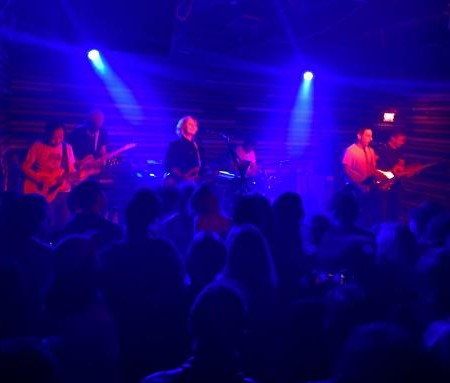
I wasn’t sure what material they’d be playing, since they had just last year come out with a new project. When the first song they played was Delaware’s self-titled opener, I knew we’d be in good hands. The band had six members onstage and shifted between having either four guitars or two basses. Either way, their sound was undeniably huge. That classic fuzzy bliss pulled a curtain over everything else in the dim red lighting of Le Ritz’s stage. The two vocalists’ quiet harmonizing was warm under blankets of shimmering tone. When they played their third track, “Mayfield”, off an unreleased record from the band’s early years, Paula Kelley’s voice finally cut its way through the mix, showing off that her talent far outshined Ackell’s quiet rambling swagger. She sounded 17 years old as she pulled out her star-shaped tambourine and the slight wobble when hitting the high notes only added character. During sections of swelling guitars, every member would stare down at their feet, focusing on the various pedals. I kept thinking to myself ‘They’re really doing it.’ When they played “Winona”, another highlight from their debut, they renamed it Raquel, for a fan in the front row celebrating their 19th birthday. I’m almost sure I heard Raquel scream that it was their favourite song when they began playing. Their setlist did not overstay its welcome and was complete with both a cover of Lana Del Rey’s “White Dress” and a cover of Madonna’s “Angel”, which finished off the show pre-encore. They let us hang onto our cheering for longer than I’m used to until they finally stepped back into the light. After tying his shoe onstage, Ackell let us know that ‘they don’t call it shoegaze for nothing.’
The band returned to play one more favourite from the old catalogue, “My Aquarium”, before announcing that we knew what was coming next. Before “Kick the Tragedy” started, they talked about how that song is bigger than the band themselves. They told us that they dropped an official music video for the 30-year-old song only last week. The video is made up of hundreds of clips of fans dancing, enjoying themselves, seeing the world, or just hanging out, which the band had requested. The comment section underneath is filled with people pointing themselves out and gushing over this video immortalizing an experience they’ve had with a loved one. Ackell expressed gratitude that there were so many people who seemed to love the song so deeply and could not believe the staggering number of clips that had been sent in. There’s something about the homemade nature of the video that perfectly captures that transcendent feeling of the track, their combined emotional impact is something every fan of the band will feel. Before the first kick drum, Ackell announced that tonight, “Kick the Tragedy” was our song.
When the long haze was over, and the musicians departed from the stage one by one, we were left with nothing but Pete Koeplin’s steady drum beat to reflect on how it had all gone by so fast.
Hate Music? Love Indie? Declan McKenna is the Show to See
If someone was a teenager who was into music and on social media in 2020, it’s likely that they might’ve been exposed to the brightly coloured indie aesthetic and its pairing with Declan Mckenna’s hit song “Brazil”. While the melodic indie anthem that criticizes the 2014 FIFA World Cup has become McKenna’s magnum opus, don't be too quick to dismiss his talent for cynical lyrics, distorted guitar riffs, and energetic stage presence.
Like many others, I was introduced to Declan McKenna through his 2017 debut album What Do You Think About the Car? and continued to explore his work with Zeros in 2020 at the height of his popularity. While I’ve not been an extensive listener, I’ve found that the handful of songs I discovered in early high school have held up. The lead single for his most recent album Nothing Works is one of my favourite songs released in the past year, but I was disappointed by the rest of the album at the time of its release. Thankfully, I recently discovered that the live rendition of the 2024 album Whatever Happened to the Beach? entirely makes up for my original lack of enthusiasm.
In my eyes, the Olympia Theatre, where Declan Mckenna was set to perform on October 18th, is the perfect concert venue. Beautiful adornments frame the stage, and the layered floor prevents squeezing and pushing to the barricade for the best view; the environment at the Olympia pre-show always feels comfortable, and the 18th was no exception. The demographic seemed almost exclusively young adults, a sea of Doc Martens and curtain bangs, girls and their boyfriends who all fell prey to the pandemic’s affinity for indie music and nostalgia. I was unsure about how the crowd’s energy would hold up during the performance; would they jump up and down as I hoped, or would they only sing along to Brazil as I worried? They were welcoming for the opener, Vlad Holiday, whose sound and physical appearance was so similar to McKenna’s that for a few minutes, I was convinced that the opener had been skipped and the crowd was really unfamiliar with McKenna’s music. Luckily my doubts dissipated when Holiday exclaimed ‘Who’s excited for Declan!!??’ and the room erupted into cheers.
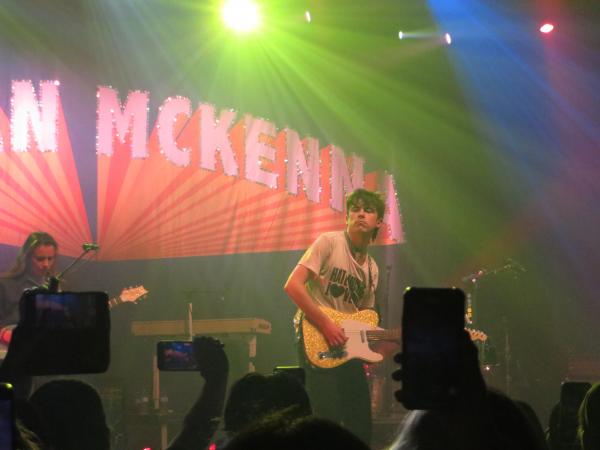
Soon enough, McKenna and his band (a keyboardist, drummer, bassist and secondary guitarist) appeared and jumped into a show full of distorted guitars and clean vocals. The musician sported a shirt reading “Hate Music? Love Indie.” and seemed to be aware of both the crowd’s excitement and his popularity, teasing “You guys wanna hear Brazil already!?” before diving into a diverse set. I was happy to experience upbeat energy from both onstage and the crowd during songs such as ‘The Key to Life on Earth’, and ‘Beautiful Faces’; the audience enthusiastically obliged to the latter song’s lyrics ‘lift your hands up’. Of course, when ‘Brazil’ was finally played, the fans went wild, everyone screaming and singing along.
However, I feel that the real highlight of the show was the encore. When Mckenna and his band left the stage, the Olympia immediately filled with cheers, whistles, and to my surprise, a chant that I’ve only heard in sports stadiums (maybe I’m incorrect and ‘olé’ is commonly used to call an encore? If someone has experienced this, please weigh in). Riding off of the crowd’s electricity, McKenna did something fairly uncommon for an encore - performed a new song! The audience and I tried to soak it in, but I’m pretty sure many of us were thinking the same thing: ‘please play British Bombs’, which to everyone’s delight, he did. The politically charged anthem is, in my eyes, objectively his best song, and the climactic bridge makes it the perfect scream-along encore track. The room was enraptured as McKenna paced the stage, taking long pauses in between the bridge’s verses for dramatic effect, embracing his British mod rockstar demeanour to the max. The dancing that ensued after McKenna broke the bridge and jumped into the final chorus was all I had been hoping for from the show, and I am happy to report I received all that and more.
Crucifixes, Belgium, and Erectile Dysfunction - An Interview With Dogo Suicide
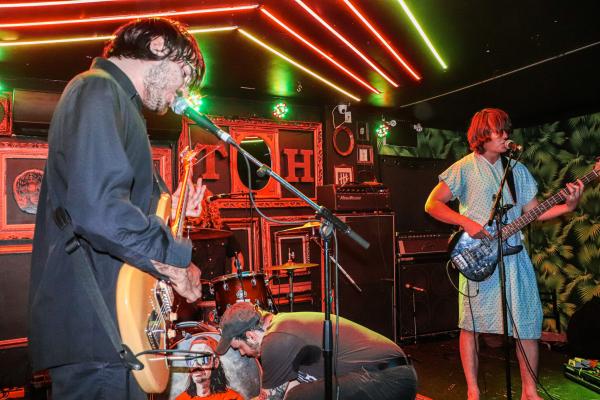
On Friday evening, I had the chance to interview Quebec City's “post-everything but a little punk overall” band Dogo Suicide before their show at Turbo Haus.
The band, consisting of guitarist and main songwriter Nicolas Côté, bassist Emmanuel and drummer Richard William Turcotte, have been touring most of the last month for their third, longest and newest EP, Apologie du Menteur
Sonam:
First question, how has the tour been for the new EP? Like, overall.
Nicolas:
Ah, not so bad. We had some really great shows and some really awful shows.
Richard:
Like, we had a full house show for our first gig on the tour for the album launch in QC, then we also had a four-member audience show in St. Honore.
Sonam:
Do you find that the smaller the area you guys go, the less well-attended it is?
Nicolas:
Depends. We had some, like, smaller shows in Montreal too. But, yeah, it really depends. Sometimes we go to, like, really smaller towns, and there's a lot of people.
Sonam:
That kind of leads into the next question. From what I know, you mostly tour around Quebec and I see a lot of places on your bills that I didn’t even know bands toured. I'm wondering if you guys were to do a larger tour, do you guys have any places you really want to play? Would you mostly stick to Francophone areas?
Richard:
We thought about playing in the eastern part of Canada, yeah? So yeah, New Brunswick, Nova Scotia, and also the western part, like Vancouver, British Columbia, yeah,
Nicolas:
I'd like to do a full Canadian Tour. We’d also think about doing Europe. I mean, we just played a show in Belgium.
Sonam:
I was just going to ask, how was that?
Richard:
insanely cool!
Nicolas:
It was only one show, but it was one great show. So that's great. It was one of the greatest shows of the tour.
Richard
The response from the public was really good. Oh yeah. Actually, we were not sure about how the music would be received.
Nicolas:
Because the first, the first artist to perform that night was like an acoustic singer-songwriter, and it was like, really, like slow and classical guitar, yeah, really slow vibe, like calm music.
Richard:
Very storytelling music,
N:
And, you know, in Belgium, they have this law about the decibels, and there's like, this meter just right across the stage, so you always know how loud you are... And it's like, 103 maximum, but we were like 115 the whole show. So we busted.
Sonam:
I feel like that's kind of cool. It's like those carnival games where you hit the hammer,
I'm glad the response was good because there's lots of times where that happens, where it's like, the opener is not always the same vibe.
R: (translated from French)
It was great, it really paid off for networking, like getting to know people on-site and getting contacts for a future Europe tour with more tours.
Sonam:
So this is also related to the touring question, but I know that, like I imagine at least touring in one province primarily has, like, some really interesting benefits, but also some really interesting challenges, do you guys have any off-the-tops of your heads?
Richard:
One of the interesting advantages is that people can relate to you and they remember you. So if you play Quebec, Montreal, or Saguenay and then you go to Gaspesie, and you do it again, a second time, third time, people are gonna remember that night and come and see you again and bring their friends. And each time you return to that place, it gets bigger and bigger.
Manu:
Not always, sometimes it's smaller and smaller depending.
S:
Well, then you know not to go back
R:
As for what's inconvenient, for Quebec is the distance, because it costs a lot too. But what would you say?
Nicolas:
It's always a weird thing for Quebec bands to tour, because there's this thing with the language in Canada, like, and we sing in French, yeah? So, you know, in Ontario, there's some French-speaking people, and a bit in New Brunswick, but that's it. So it's really about Quebec, and when you go outside of these borders, it's really only English, so you're always labelled as the band who sings in French. So there's always this thing, but we kind of like it. It's not a negative thing. It's just a thing. It is. They cannot relate to the lyrics.
Nicolas:
We're really looking forward for more Europe.
Sonam:
I feel like there would be a lot of potential there because we think that Canada's very bilingual, but not like in Europe. Like, you know, the average cashier speaks like, five languages and you're just here.
Nicolas:
But even though we talked about going to the US would be cool too, yeah, we like the East Coast or West Coast,
Richard:
we would play too. We would like to play. Sorry, to play anywhere.
Nicolas:
Yeah, we don't really care. We don't really care,
Richard:
but at least if the people are accepting our music and that we speak French, it's okay.
Sonam:
I saw that on your guy's Instagram. You said that your EP was recorded beside a church and a bakery.
Is there anything else about the recording, like experience that was, I don't know different or was it kind of standard for what you guys do?
Richard:
So we were staying in the rectory which is the, you know, the house where the priest lives. So there was, like, the church, the house, we were saying, which was a physical and there was the bakery. And, like, in the house, it was really weird, because there were a lot of crosses, like, all over. It was full of them. And in only one room, the bathroom, the single bathroom with only the toilet, and it was, you know, wall to wall, the Red Room, there were at least 400 crosses on the walls.
Sonam:
Do you think that, like, added a certain energy to the recording?
Nicolas:
We were really quiet and focused on the recording. So we just went there to sleep, and we just had fun, like watching that. But the recording itself, we recorded with Zachary Parle, who is now pretty much a good friend of ours, and his studio is in a farm, on the second floor of a very huge barn. And on the first floor, It's a vineyard, so there's some of those big fields that you can see from the studio. Oh, that sounds really
Ric
Yeah. Each row of grapes has their names, which are the names of the clients that are helping to harvest. So, yeah, each year they have some special editions of wines and ciders. It’s a really beautiful place, yeah.
Sonam;
I gotta say, one thing I like really stood out when you guys put up the new EP was the cover. It's crazy because it's like a painting. It's really well done. But also this figure on the cover. I recognized him (he was sitting with them before we went outside for the interview). What I'm so intrigued by is the getup and conceptually, what's the connection?
Nicolas;
We just like the idea of someone being on the stage and doing absolutely nothing. So that's just the funniest thing ever, like, a huge contrast, nice, yeah, yeah,
Richard;
It's kind of a joke. But at the same time, an artistic way of presenting a guy, I don't know.
Nicolas;
It's not deep, you know, it's not like, a deep thing. We just found it funny. He's a friend of ours.
It was kind of a stunt in the same way.
Sonam:
yeah, it's performance art, yeah, but he does nothing, I don't know. Yeah, that's, it's hard to do. Yeah, he's really good at it, all right?
Richard:
It's impossible. Just try it for 10 minutes and
Sonam:
One thing I also am very curious about is your song “Contresens". Could you explain a bit what it means? Something about misunderstanding?
Nicolas:
At first, the song was, how do we say it in English? Oh, “Dysfonction Erectile” (everyone started laughing at this point).
I never thought someone was gonna ask that question, about that specific song, but that was the idea of not being able to satisfy someone's needs. That's the idea of the song. So it's, like, started up as a joke, but you know the lyrics, if you read the lyrics, you cannot say it's about one specific thing.
Sonam
I was also gonna ask, like, on that topic, do you Nicholas, do like all of the writing and
Nicolas:
In the beginning was really me coming with the whole songs, like I take the whole demos and say
“let's play that”. And then throughout the recordings, we started doing Arrangements. For “Apologie” really, I came up with all the riffs. And we jam. We just jammed it in the jam space, and it made it greater.
But right now, we're already working on some new stuff, and we have, like, a specific workflow right now with Manu, which is Manu writes a lot of riffs, and we do a lot of we-transfer back and forth, of like, riffs, and we have a lot of demos, and once they're ready, we show it to Rich and he does the drums.
Sonam:
That's really great. Well I don't have any more questions, I think that might be, that might be it. Thank you again for your time and willingness to do the interview in English, I really appreciate that.
After that ended, they let me know that they're hoping to start to plan on making an album soon, if they can finance it, as record making can be so expensive. So keep your eyes and ears peeled for that, and if you're curious, you can support the band on Bandcamp, streaming services and as always by attending shows.
The show itself was high energy and exciting. Opening band “Autre Part” warmed up the audience for an atmospheric evening of wall of sound, distorted and reverb-soaked melodic rock, playing songs from their new album Le pire est à venir.
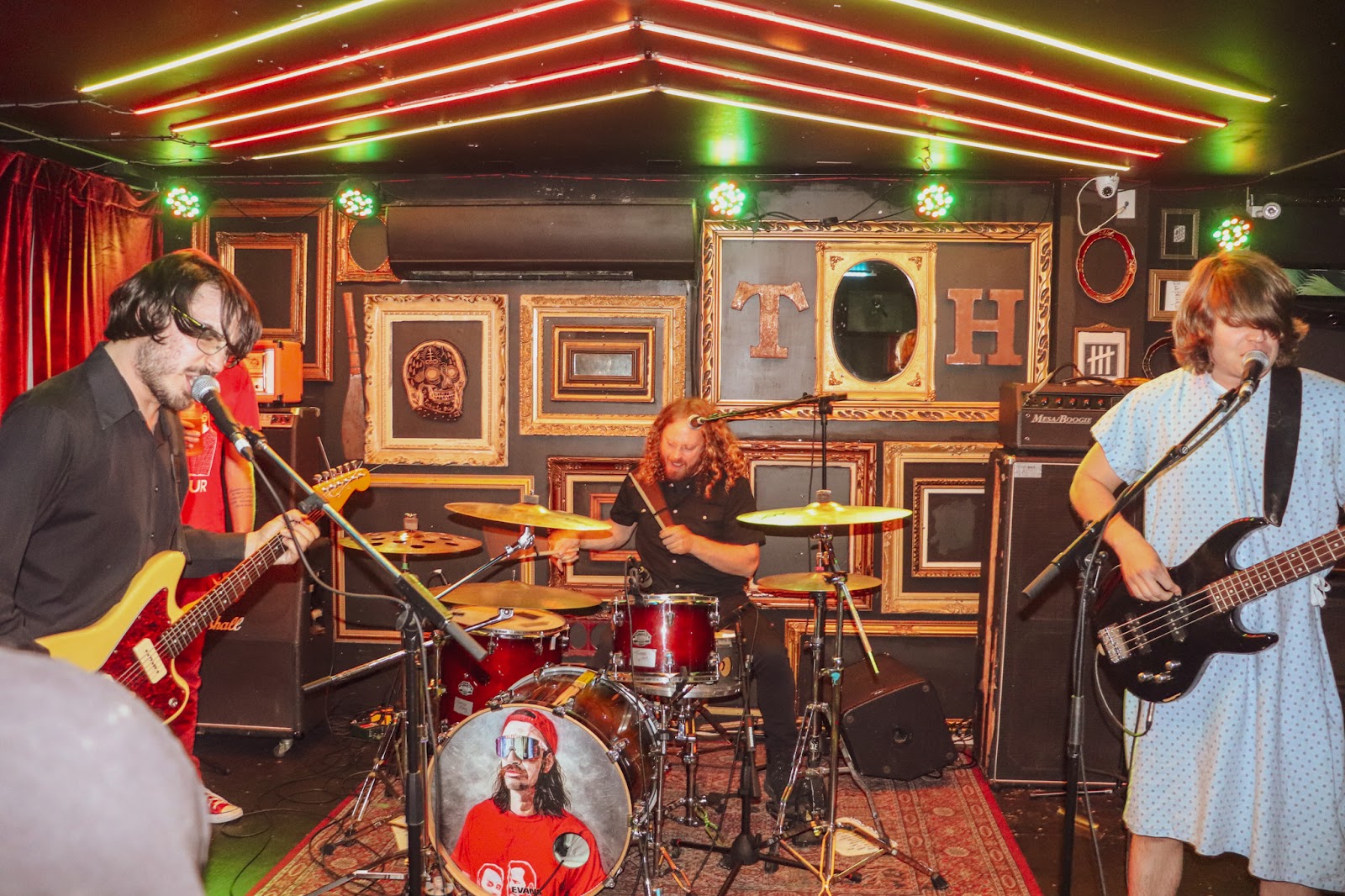
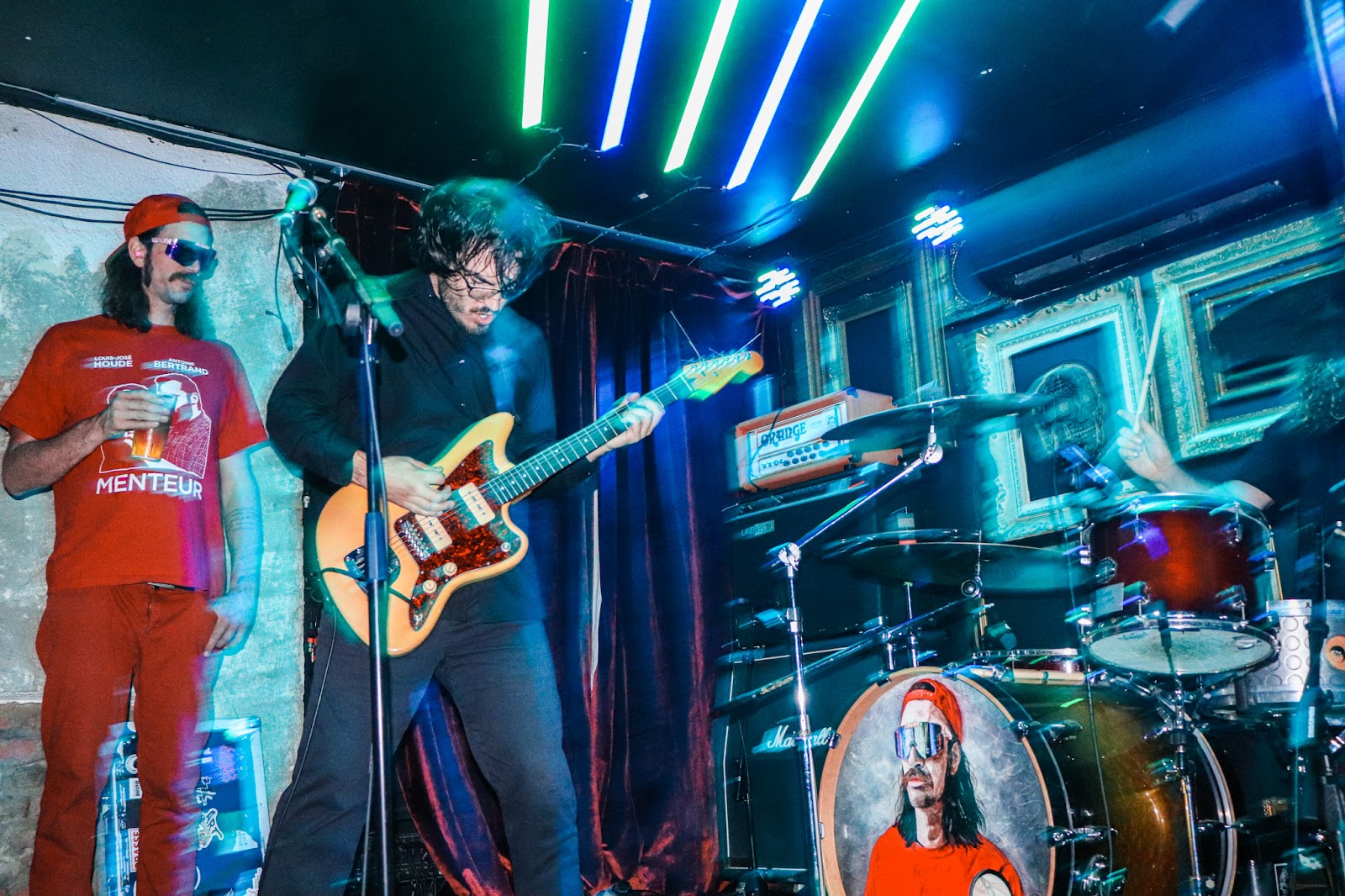
Dogo took the stage after a short break, the show beginning with a recorded monologue being played in complete darkness, before launching into the title song from their 2021 EP Sexe pour les yeux. As you watch the band play, you notice a fourth individual on stage: a man dressed head to toe in all red, with a huge pair of chromatic sports sunglasses, a backwards baseball hat and a pint in hand. He stood off to the side, only ever moving to turn his head, stare at the audience, sip from his glass and maneuver around the band's energetic playing. If you’ve listened to the EP, you would recognize this individual as the man on the cover (as well as the kick drum head). This man would stay on stage the whole show, continuing his routine and always seeming to have a full glass (I’m still confused as to how).
Aggressive and distorted, the band continued to play, with the bulk of their set being their newest EP played in full. Well rehearsed and quick, the band brought the same quality and precision as the recording, playing at full power and energy the whole time. Every song ended with a quick “merci” from frontman Nicolas before the band would launch seamlessly into the next song.
During the intro to their instrumental song “Contrejour”, the audience was surprised to hear the song's trumpet part being played from right within the audience as it continued into the following song on the record, “Contresens”. By far one of their strongest songs, starting off with very heavy layers of bass and guitar as the song roller coasters between screaming verses, speedy instrumental builds, jaunty, start-stop and melodic riffs, three-part vocal harmonies and the heaviest of distorted space rock breakdowns.
Finishing the set with some songs from older EPs, a grateful thank you after each one, the band delivered a very loud, very energetic and very unique performance that made for a really great evening of really heavy tunes.
Pages



Staff Login | Advertise | Our Location | RSS | Contact Us
