Quinton Barnes Helps Me Understand the Meaning of Life
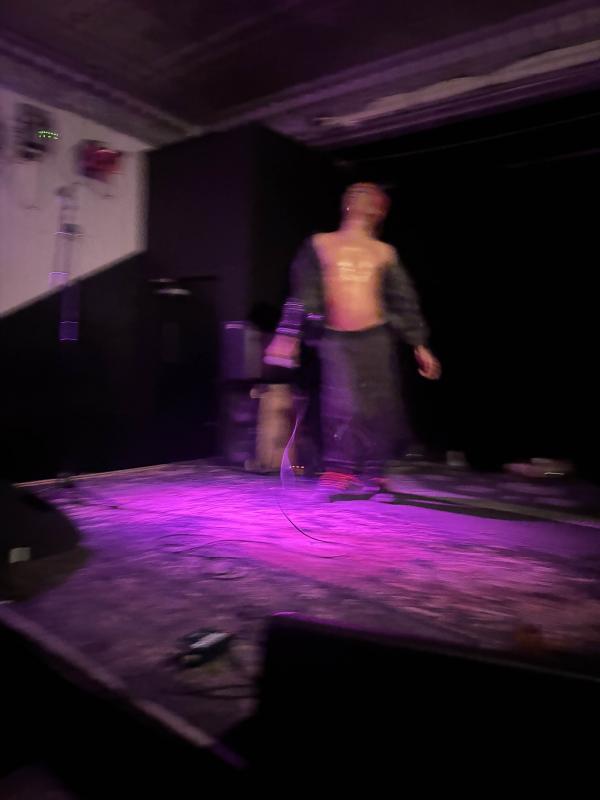
A few days before Quinton Barnes was set to perform at Casa Del Popolo, I listened to Quinton’s most recent project, Black Noise, an album characterized by the unsettling cacophony of orchestral instruments inspired by Miles Davis, overlayed over an otherwise beautifully produced album. On the day of the show, I woke up at 6 in the morning to catch a rideshare from Ottawa to Montreal. At around 7:30, right at the Quebec/Ontario border, the driver hit a patch of ice going over 100 km/h, lost control and swerved off the side of the road, nestling itself in a snowy ditch, leaving us unscathed. I had narrowly escaped death, I should have been overjoyed, but instead I found myself sobbing on the side of the highway. The realization that my life could be taken away at any moment, without preparation, that I could never be fully in control over whether I lived or died, filled me with dread.
As the concert drew closer, the uncomfortable saxophone runs, the erratic screams of the trumpets, and the screeching strings that I remembered from Black Noise played through my head. While I knew it might not be the easiest listening experience, I walked into the bar with confidence and made my way to the front of the crowd, knowing that I was prepared for what was to come…or so I thought. Quinton Barnes walked up to the stage, plugged his phone into the sound system, and affronted the audience with booming 808s, otherworldly synthesizers, distorted samples and an aggressive style of rapping. This was not Black Noise; this was something totally different. Life had taken me by surprise once again, and it wouldn’t be the last time that happened that night.
In the first half of the show, Barnes performed songs from “For the Love of Drugs”, which, according to the artist, takes inspiration from industrial R&B, hip-hop, electronic artists like SOPHIE and Arca, Afropessimism and “a loud ass disruptive baby.” I found myself bobbing my head to the incredibly heavy and grimy instrumental on “To Freedom”, but it was when the song suddenly switched to an elegant, synthy, beautifully sung melody that I realized how truly talented this artist was. As the night went on, Barnes continued showcasing his versatility. Elements from the Southern Trap movements of the early 2010s appeared on songs like “Stunner” and “Scenes Of”, while the ethereal production on songs like “Fuck On U” turned the room into a dream sequence.
Throughout the show, Barnes occupied the instrumental breaks with energetic and explosive dancing. Despite this, the crowd remained stubbornly still, as if in direct defiance of Barnes’ enthusiasm. This all changed when “LaLaLa”, the first track of the album CODE NOIR, blasted out of the speakers. An uneasy feeling spread throughout the room as if we were all thinking, “Uh-oh, am I gonna start dancing too?” As Barnes continued performing his catchy electronic dance songs, the crowd started to stir, the tiny backroom of the bar morphed into a Boiler Room set, and time seemed to stop. Soon, the whole room was dancing as if in a trance, and I was enthralled. Through both his infectious rhythms and his visually stimulating stage presence, Barnes could make any crowd dance, and I suspect it won’t be too long until every club in the city will be scrambling to book him.
In the days following the accident, I came to the realisation that the unexpected is what makes the human experience as beautiful as it is tragic. Not knowing what will happen next is part of the fun, and I believe that there are very few people on this planet who could have made me understand this better than Quinton Barnes. When his show finally ended, I realized that for the second time that day, I had lost control over my own life, and I couldn’t have been happier about it.



Staff Login | Advertise | Our Location | RSS | Contact Us
